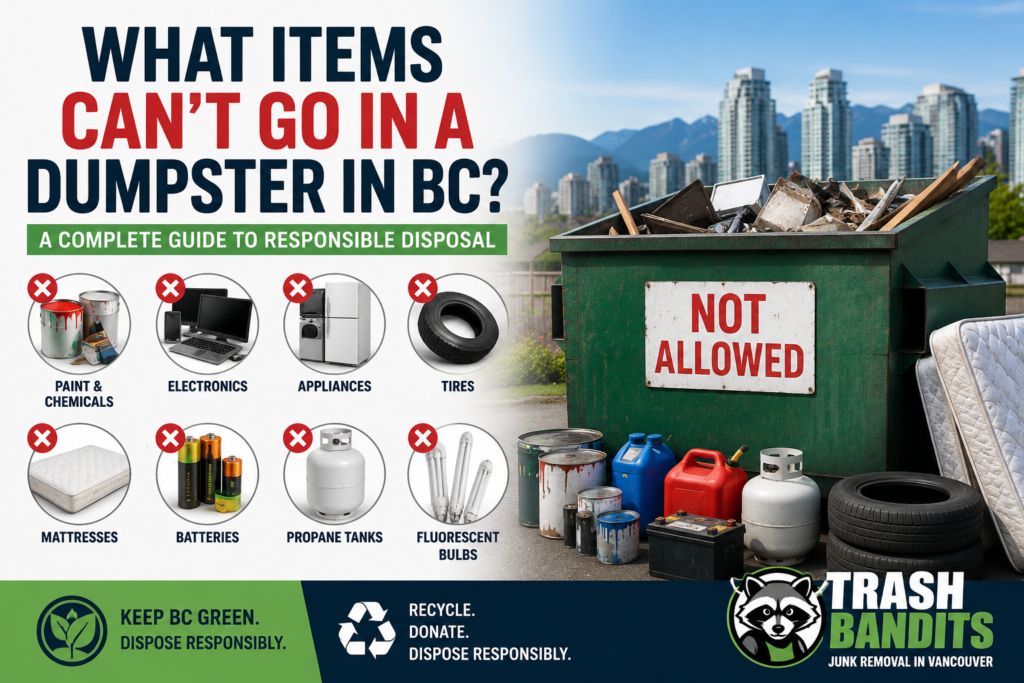
Whether you’re renovating your home, clearing out a garage, or managing a construction project, renting a dumpster is one of the easiest ways to handle large amounts of waste. However, not everything can be tossed into a dumpster. British Columbia has strict disposal and recycling regulations that prohibit certain materials from entering landfills to protect the environment and public health.
If you’re planning a cleanup project or looking for junk removal Vancouver, understanding these rules can save you from unexpected fees, rejected loads, and potential fines. In this guide, we’ll explain which items can’t go in a dumpster in BC, why they’re restricted, and how to dispose of them responsibly.
Why Are Some Items Prohibited from Dumpsters in BC?
British Columbia has some of Canada’s most comprehensive recycling and waste management programs. Many materials contain hazardous chemicals, valuable recyclable components, or substances that can contaminate landfills and waterways.
Keeping prohibited items out of dumpsters helps:
- Protect workers handling waste
- Prevent soil and groundwater contamination
- Reduce landfill waste
- Support provincial recycling initiatives
- Recover reusable materials
Knowing these restrictions before loading your dumpster helps ensure your cleanup goes smoothly.
1. Hazardous Household Waste
Hazardous materials should never be placed in a dumpster because they can leak, ignite, or contaminate the environment.
Common hazardous waste includes:
- Paint and paint thinners
- Motor oil
- Gasoline
- Antifreeze
- Solvents
- Cleaning chemicals
- Pesticides
- Herbicides
- Pool chemicals
These products should be taken to designated recycling or hazardous waste collection facilities instead of being mixed with general waste.
2. Electronics (E-Waste)
Electronic devices contain metals, plastics, and components that can be recycled. Many also contain substances that require careful handling.
Examples include:
- Televisions
- Computers
- Monitors
- Laptops
- Printers
- Gaming consoles
- Speakers
- Keyboards
- Mobile phones
- Tablets
Instead of throwing electronics into a dumpster, recycle them through approved e-waste programs.
3. Refrigerators and Cooling Appliances
Large appliances are often accepted only under specific conditions. Appliances containing refrigerants require special handling because refrigerant gases can harm the environment if released improperly.
These include:
- Refrigerators
- Freezers
- Air conditioners
- Wine coolers
- Dehumidifiers
Always have refrigerants removed by qualified professionals before disposal.
4. Batteries
Batteries contain chemicals and heavy metals that should never enter regular waste streams.
Restricted batteries include:
- Car batteries
- Lithium-ion batteries
- Rechargeable batteries
- Button-cell batteries
- Power tool batteries
Many retailers and recycling depots accept batteries for safe recycling.
5. Tires
Old tires cannot be disposed of in standard dumpsters. They are recyclable and can be processed into products such as playground surfaces, rubber mats, and road materials.
Most tire retailers and recycling depots accept used tires.
6. Mattresses and Box Springs
Mattresses take up significant landfill space and contain recyclable materials such as metal springs, foam, wood, and fabric.
Many recycling facilities accept:
- Mattresses
- Box springs
- Foam mattresses
Depending on your location, disposal or recycling fees may apply.
7. Propane Tanks and Gas Cylinders
Pressurized containers present explosion hazards and should never be placed in dumpsters.
Examples include:
- BBQ propane tanks
- Camping cylinders
- Helium tanks
- Oxygen tanks
These items require specialized recycling or return programs.
8. Fluorescent Bulbs and CFLs
Fluorescent lighting products contain small amounts of mercury.
Do not dispose of:
- Fluorescent tubes
- CFL bulbs
- HID lamps
Instead, take them to approved recycling locations.
9. Asbestos-Containing Materials
Older homes in British Columbia may contain asbestos in insulation, flooring, ceiling tiles, siding, and drywall compounds.
If asbestos is suspected:
- Stop work immediately.
- Arrange professional testing.
- Hire licensed asbestos removal specialists.
Never place suspected asbestos in a dumpster.
10. Construction Materials with Restrictions
Many renovation materials are accepted, but some require separate disposal.
These may include:
- Drywall
- Pressure-treated wood
- Roofing materials
- Contaminated soil
- Certain insulation products
Always confirm what your dumpster provider accepts before beginning demolition.
11. Yard Waste
Green waste is often handled separately from general garbage.
Examples include:
- Grass clippings
- Tree branches
- Leaves
- Garden plants
- Shrubs
Many municipalities compost these materials instead of sending them to landfills.
12. Medical and Biohazard Waste
Medical waste should never be mixed with household waste.
Examples include:
- Needles
- Syringes
- Medical sharps
- Biological waste
- Expired medications
These items require approved disposal programs.
What Happens If You Put Prohibited Items in a Dumpster?
Placing restricted materials in a dumpster can lead to several problems, including:
- Rejected landfill loads
- Additional disposal charges
- Project delays
- Environmental contamination
- Safety risks for waste handlers
- Potential regulatory penalties
Checking prohibited items beforehand is always easier than dealing with unexpected costs later.
Tips Before Renting a Dumpster
Before loading your dumpster:
- Separate hazardous materials.
- Set electronics aside for recycling.
- Keep batteries and propane tanks out of the bin.
- Ask your provider about weight limits.
- Confirm which construction materials are accepted.
- Sort recyclable items whenever possible.
A little planning helps your cleanup stay efficient and compliant.
Why Professional Junk Removal in Vancouver Is the Easier Option
If you’re unsure whether certain items can go into a dumpster, hiring a professional junk removal in Vancouver service can save you time and hassle.
Experienced crews understand BC disposal regulations and know how to sort materials responsibly. Instead of making multiple trips to different recycling depots, professionals handle the lifting, transportation, recycling, and disposal for you.
Whether you’re cleaning out a home, renovating a property, removing old furniture, or clearing construction debris, professional junk removal helps ensure prohibited materials are managed safely and in accordance with local regulations.
Frequently Asked Questions
Can I throw paint in a dumpster in BC?
No. Paint is considered hazardous household waste and should be taken to an approved recycling or collection facility.
Can batteries go into a dumpster?
No. Household, automotive, and rechargeable batteries should always be recycled through designated programs.
Are refrigerators allowed in dumpsters?
Not until refrigerants have been properly removed by qualified technicians.
Can I dispose of a mattress in a dumpster?
Some facilities restrict mattresses because they can often be recycled. Check with your dumpster provider first.
Can drywall go into a dumpster?
Sometimes. Acceptance depends on local disposal facilities and whether the drywall is clean or contaminated.
What should I do if I’m unsure about an item?
Contact your dumpster rental or junk removal in Vancouver provider before disposing of it. They can advise whether the item is accepted or requires special handling.
Final Thoughts
Knowing what items can’t go in a dumpster in BC helps protect the environment, keeps your cleanup project compliant with local regulations, and prevents unnecessary disposal fees. Hazardous waste, electronics, batteries, appliances containing refrigerants, propane tanks, asbestos, and several other materials require specialized disposal or recycling.
If you want a stress-free cleanup, professional junk removal in Vancouver is an excellent solution. A knowledgeable team can sort, recycle, donate, and dispose of your unwanted items responsibly, allowing you to focus on your project while ensuring everything is handled safely and efficiently.