Summary:
Not every unwanted item belongs in your regular garbage bin. Vancouver residents should separate hazardous products, batteries, electronics, appliances, and renovation debris before disposal. This guide explains what can’t be thrown away in Vancouver, where to find approved recycling and drop-off options, and how to prepare items safely. Trash Bandits provides junk removal for eligible household junk, furniture, appliances, and renovation debris across Vancouver and nearby communities, subject to item acceptance and disposal requirements.
What Items Can’t Go in Regular Garbage in Vancouver?
Clearing out a home, garage, or renovation site can leave you with items that cannot go into regular garbage. Paint, batteries, propane tanks, electronics, and certain construction materials need special handling. If you’re wondering what you can’t throw away in Vancouver, this guide explains where to take restricted waste, what junk removal crews can collect, and how Trash Bandits helps residents manage unwanted household and bulky items responsibly.
Which Items Cannot Go in Regular Garbage in Vancouver?
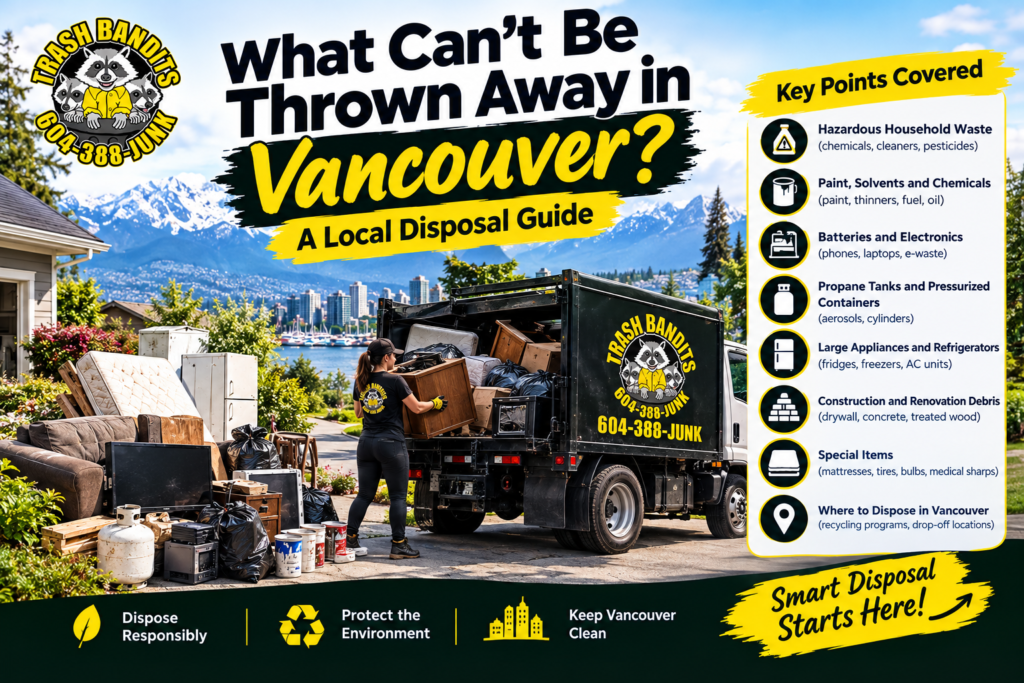
Many products require special disposal because they can create fire risks, contaminate the environment, or damage waste-handling equipment. The City of Vancouver recommends using its Waste Wizard to find appropriate disposal options for items that need special care.
Hazardous Household Waste:
Products such as pesticides, strong cleaners, solvents, and other hazardous chemicals should not be placed in regular garbage or recycling bins. Keep them in their original, labelled containers when safe to do so, and check an approved collection site’s requirements before transporting them.
Paint, Solvents, and Chemical Products:
Leftover paint, paint thinners, gasoline, motor oil, and flammable liquids may require dedicated recycling or hazardous-waste collection programs. Some paint and oil products are accepted at designated depots, but acceptance rules and quantity limits vary. Never pour chemicals into drains or combine different products.
Batteries and Electronic Waste:
Household batteries, rechargeable batteries, laptops, phones, and other electronics need appropriate recycling. Damaged lithium-ion batteries can cause fires if crushed or improperly handled. Metro Vancouver advises residents not to place batteries in garbage or recycling bins. Use an approved battery collection location instead.
Propane Tanks and Pressurized Containers:
Propane cylinders, aerosol products, and other pressurized containers need careful handling. Never puncture, crush, or burn them. Check an approved depot’s rules for refillable and disposable cylinders before dropping them off.
Large Appliances and Refrigerators
Refrigerators, freezers, air conditioners, and other large appliances may contain refrigerants or materials that require special recycling. Use an appliance recycling program or a facility that accepts the specific item. Arrange professional removal if the appliance is too heavy or difficult to move safely.
Construction Debris and Renovation Waste
Drywall, concrete, soil, metal, treated wood, and mixed renovation debris may have different disposal requirements. The Vancouver Landfill accepts certain construction materials under specific conditions, while other materials are excluded.
What Items Require Special Disposal in Vancouver?
Items such as mattresses, electronics, batteries, tyres, fluorescent bulbs, and medical sharps require special disposal or recycling to protect public health and the environment.
Old Mattresses and Furniture:
Mattresses and box springs should go to an approved mattress recycling or disposal facility rather than being left beside a bin without permission. The Vancouver Landfill accepts mattresses for a fee, subject to daily limits. Usable furniture may be donated or reused, while damaged items can be considered for junk removal Vancouver services if accepted.
Televisions, Computers, and Small Electronics:
Televisions, monitors, computers, printers, and small appliances may be eligible for electronics recycling programs. Search for an approved collection site through Return-It Electronics. Before recycling phones, computers, or storage devices, back up important files and remove personal information.
Tires, Car Batteries, and Automotive Fluids:
Tires, lead-acid vehicle batteries, used motor oil, and antifreeze should be taken to suitable recycling or collection programs. Never mix automotive fluids or pour them into household drains. Confirm accepted quantities and container requirements before visiting a depot.
Fluorescent Tubes and Light Bulbs:
Fluorescent tubes and certain light bulbs require careful handling because they may contain materials that need expert recycling. Keep them intact where possible and follow the collection site’s packaging instructions.
Medical Sharps and Unused Medications:
Needles and other medical sharps must not be placed loose in household garbage. Use an approved sharps container and follow local pharmacy or healthcare collection guidance. Return unused medications through a participating pharmacy take-back program rather than flushing them down the toilet.
How to Dispose of Restricted Items in Vancouver:
Where to take hazardous waste, electronics, batteries, appliances, and renovation debris in Vancouver by using approved recycling programs and designated disposal facilities.
Where to Take Household Hazardous Waste:
Start with the City’s Waste Wizard and disposal information. The Vancouver Landfill and Zero Waste Centre accepts several designated materials for recycling, but it does not accept every hazardous product. Check the current list before travelling.
How to Recycle Electronics and Batteries:
Use Return-It Electronics for eligible electronic products and approved battery collection programs for household and rechargeable batteries. Keep batteries separate from loose scrap metal and avoid transporting damaged batteries without guidance from the collection provider.
How to Dispose of Appliances and Scrap Metal:
Look for a designated appliance recycling program or a facility that accepts large appliances and scrap metal. The Vancouver Landfill lists several eligible materials, including large appliances and scrap metal, subject to its conditions and limits.
Where to Take Renovation and Construction Debris:
Separate clean wood, metal, drywall, concrete, and other materials where possible. The right disposal facility depends on the material, its source, and whether it contains hazardous substances. Asbestos requires particular care: do not disturb suspected asbestos-containing materials. The City provides specific testing, containment, and disposal instructions for residential asbestos waste.
How to Find the Right Disposal Facility:
Use Metro Vancouver Recycles to search by material and location. Call the facility before visiting if the item is unusual, damaged, contaminated, or unusually large.
What Happens If You Throw Restricted Items in the Garbage?
Throwing restricted items in regular garbage can create fire hazards, harm waste workers, contaminate the environment, and lead to disposal surcharges or penalties under applicable waste regulations.
Potential Safety and Environmental Risks:
Hazardous liquids can leak, chemicals can contaminate surrounding materials, and improperly discarded batteries can start fires in collection vehicles or waste facilities. Separating these items helps protect waste workers and supports responsible recycling.
Collection Restrictions and Possible Penalties:
Metro Vancouver disposal facilities inspect loads for banned materials. The regional disposal-ban program applies surcharges to loads containing certain prohibited materials, and additional cleanup or remediation costs may apply. Check the current disposal-ban rules before taking a mixed load to a facility.
How Proper Sorting Helps Prevent Disposal Problems:
Sort waste into separate groups before pickup or transport. Keep hazardous products away from furniture and general junk, and separate recyclable materials where practical. This makes it easier to identify suitable disposal options and avoid rejected loads or additional fees.
Can a Junk Removal Company Take Restricted Items in Vancouver?
A junk removal company can collect many bulky household items, furniture, and eligible renovation debris, but hazardous materials such as paint, chemicals, propane tanks, and asbestos may require specific disposal services.
Items a Junk Removal Service Can Usually Collect:
The answer to what junk removal companies take depends on the company’s accepted-item policy and the destination facility’s rules. Trash Bandits can help with eligible items such as:
- Sofas, chairs, tables, and other unwanted furniture.
- Mattresses and box springs, subject to acceptance.
- Household appliances that qualify for collection.
- General household junk and storage-room clutter.
- Eligible renovation debris, yard waste, and unwanted cabinets.
- Garage, basement, and estate cleanout items.
Items That Require Specialized Disposal Providers:
Trash Bandits should not be assumed to accept every restricted material. Paint, solvents, gasoline, pesticides, medical sharps, propane cylinders, and asbestos may require dedicated programs or specialist providers. Contact the team before booking if your load includes any of these items.
How Professional Junk Removal Helps With Heavy or Bulky Waste:
Moving large furniture, appliances, and mixed household junk can be difficult without the right vehicle and lifting equipment. A professional crew can help with eligible items, reduce the effort involved in loading, and sort materials for appropriate disposal where practical.
Vancouver Junk Removal Services for Items You Cannot Throw Away
Trash Bandits helps remove eligible bulky items, furniture, appliances, and renovation debris across Vancouver, with responsible disposal options for items that require special handling.
Residential Junk Removal and Household Cleanouts:
Trash Bandits helps homeowners and tenants clear unwanted belongings, general household junk, and clutter. If you’re arranging a move or preparing a property for new occupants, confirm which items can be collected before scheduling.
Furniture and Appliance Removal:
Unwanted couches, bed frames, tables, and eligible appliances can take up valuable space. Trash Bandits offers removal for accepted bulky items, subject to access, weight, and disposal requirements.
Garage, Basement, and Estate Cleanouts:
A cleanout may involve boxes, old furniture, storage shelves, and miscellaneous household belongings. Sorting reusable items, recyclable materials, and restricted waste before the appointment can make the job easier.
Renovation Debris Removal:
Eligible renovation debris, such as certain wood offcuts, cabinets, and non-hazardous materials, may be suitable for collection. Confirm the material type and volume in advance, especially for drywall, concrete, soil, or mixed construction loads.
Responsible Sorting, Recycling, and Disposal:
Responsible removal starts with knowing what is in the load. Trash Bandits can help identify items that may be suitable for collection, but hazardous materials and other excluded products should be directed to appropriate facilities.
Frequently Asked Questions:
What Items Are Banned From Regular Garbage in Vancouver?
Common examples requiring special handling include household batteries, propane tanks, paint, pesticides, medications, electronics, and certain hazardous or recyclable products. Exact rules depend on the item and collection system.
Can You Throw Away a Mattress in Vancouver?
Mattresses should be taken to an approved mattress recycling or disposal facility or collected by a service that accepts them. Check current fees and daily limits before arranging drop-off.
Where Can You Dispose of Paint in Vancouver?
Use an approved paint recycling program or a designated collection facility. Check the Vancouver Landfill and Zero Waste Centre for current accepted materials and quantity limits.
Can Electronics Go in the Garbage?
Many electronics have designated recycling programs and should not be placed in regular garbage. Use an approved collection site and erase personal data from devices before recycling.
How Do You Dispose of an Old Refrigerator in Vancouver?
Arrange collection through an eligible appliance recycling program or take it to a facility that accepts refrigerators. Check transport requirements and confirm acceptance before moving the appliance.
Need Help Disposing of Unwanted Items in Vancouver?
Knowing what can’t be thrown away in Vancouver helps you avoid unsafe disposal and plan your cleanout properly. If you have furniture, eligible appliances, household clutter, or suitable renovation debris to remove, Trash Bandits can help you clear the space without having to handle every bulky item yourself.
Trash Bandits serves Vancouver, Burnaby, Richmond, New Westminster, and nearby communities. Pricing is based on truck space, with the provided rates starting at $250 for a quarter truck, $450 for half a truck, $650 for three-quarters, and $800 for a full truck. Confirm current rates and any additional charges when requesting a quote.
Call or text +1 (604) 388-5865, or send up to eight photos for an estimate. Before booking, mention any unusual, hazardous, or restricted items so the team can confirm whether they can be accepted.