
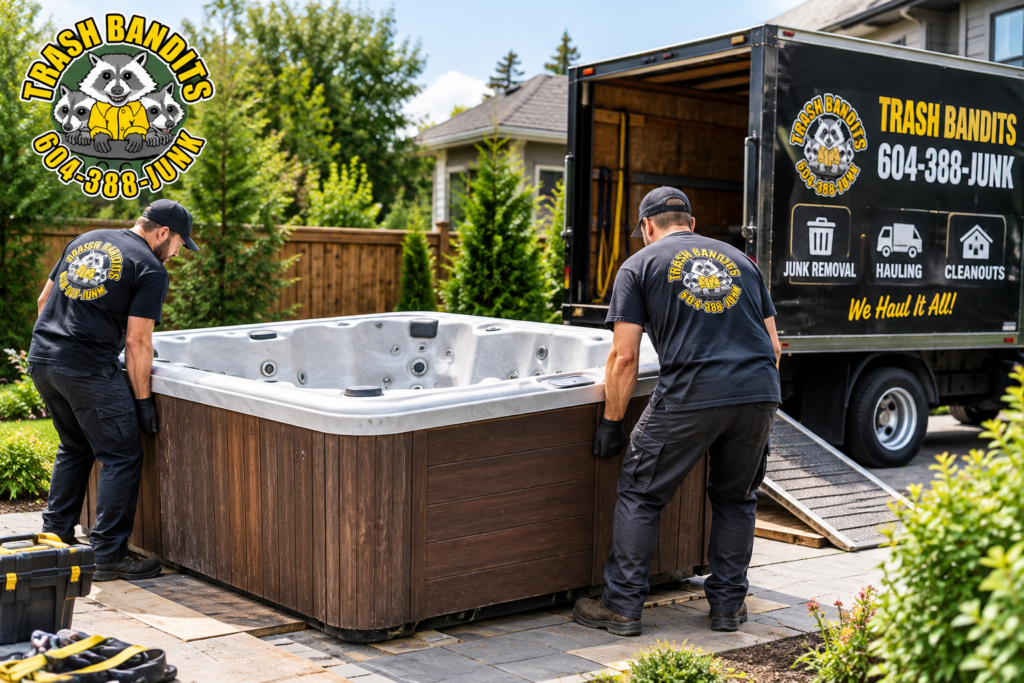
This guide explains getting rid of a hot tub, from assessing and preparing the unit to safe removal, recycling, disposal, and cost considerations. It covers DIY removal, professional hot tub removal services, local disposal facilities, recycling options, and ways to reuse the space afterward. We help homeowners handle bulky hot tubs through practical removal, hauling, and disposal solutions while explaining what to expect before booking a service.
What You Need to Know About Getting Rid of a Hot Tub:
An old hot tub can become a major problem when it stops working, takes up valuable backyard space, or becomes too expensive to repair. Getting rid of a hot tub is not as simple as putting it beside the check. These units are large, heavy, and made from several materials, including acrylic, fiberglass, plastic, wood, metal, insulation, and electrical components.
If you are wondering how do i get rid of a hot tub, the right approach depends on its condition, size, location, local disposal rules, and whether you plan to sell, donate, recycle, or hire professionals to remove it.
For homeowners planning getting rid of a hot tub in Vancouver, professional removal can also make the process easier because the unit may need to be dismantled, carried through a narrow space, loaded, transported, and taken to an appropriate facility. You can also learn more about Junk removal Vancouver for help with other large household items.
How to Get Rid of a Hot Tub:
There are several hot tub disposal options, but the first step is to understand what you are dealing with. A small portable spa may be easier to handle than a large built-in unit surrounded by decking.
Assess the Hot Tub Before Removal:
Start by checking the hot tub’s size, condition, location, and construction. Determine whether it is portable or built into a deck or concrete area. Look for access points, stairs, gates, fences, and other obstacles that could make backyard hot tub removal more difficult.
If the unit still works, consider whether repairing or selling it makes sense. If it is damaged, cracked, heavily deteriorated, or no longer safe to operate, disposal may be more practical.
Decide Whether to Remove, Sell, Donate, or Dispose of It:
A working hot tub may have resale or donation value. Before arranging spa removal, check whether someone can reuse the unit. You may be able to sell it locally if it is clean, functional, and reasonably easy to transport.
For a damaged or outdated unit, old jacuzzi disposal or professional removal may be more appropriate. Think about transportation costs as well as the time required to dismantle and move it.
Check Local Disposal and Recycling Rules:
Do not assume that a hot tub can go into ordinary household garbage. Because it is a bulky item containing electrical equipment and multiple materials, disposal requirements can vary by municipality and facility.
Before getting rid of a hot tub, contact your local waste or transfer facility and ask whether they accept hot tubs, whether advance arrangements are required, and whether additional fees apply.
How to Prepare a Hot Tub for Removal:
Good preparation makes removing a hot tub safer and more efficient. It also reduces the risk of water damage, electrical hazards, and injuries during handling.
Drain the Hot Tub Completely:
Turn off the system and drain all water from the tub. Remove remaining water from the plumbing lines where practical. If you are researching how to get rid of algae in a hot tub before disposal, clean and sanitize the unit rather than allowing dirty water or algae-filled water to remain inside it. Follow local rules for disposing of the wastewater.
Disconnect the Electrical and Plumbing Connections:
Electrical connections should be handled carefully. If the hot tub is hardwired into the home’s electrical system, a qualified professional should disconnect it safely. Also check plumbing connections, pumps, filters, and other equipment. Never begin cutting or dismantling a unit while it is still connected to electricity or water.
Remove the Cover, Accessories, and Loose Parts:
Take off the cover and remove filters, steps, pillows, control panels, removable pumps, and other loose accessories where appropriate. Separate reusable or recyclable components from materials intended for disposal. This can make the unit lighter and simplify dismantling a hot tub.
Clear a Safe Path for Removal:
Measure the route from the hot tub to the vehicle or loading area. Remove furniture, garden equipment, obstacles, and loose objects from the path. For tight spaces, consider the width of gates and doors. A clear route can make hauling away a hot tub much easier and reduce the chance of property damage.
How to Remove a Hot Tub:
Once the unit is disconnected and prepared, you can determine whether it can be moved whole or needs to be dismantled.
Can You Remove a Hot Tub Without Cutting It?
Some portable hot tubs can be moved without cutting them apart, especially when there is enough space for several people and suitable moving equipment. However, a full-size spa can weigh hundreds of kilograms. Moving it through a narrow backyard, staircase, or gate may be difficult even when several people are available.
When Should a Hot Tub Be Cut Into Pieces?
Breaking down a hot tub may be necessary when the unit cannot fit through the available access route. Cutting can reduce the size of the shell and make individual sections easier to carry. However, cutting a hot tub involves sharp materials, fiberglass dust, wiring, plumbing components, and heavy sections. It should only be done with suitable equipment and protective measures.
Tools Needed for Hot Tub Removal:
Depending on the unit, removal may require:
- Screwdrivers and wrenches
- Pliers and cutting tools
- Heavy-duty gloves
- Safety glasses
- Protective clothing
- Moving straps
- Dollies or carts
- Appropriate saws for dismantling
- Tarps or protective materials
The required equipment depends on the construction and installation of the spa.
Why Professional Hot Tub Removal May Be Safer
Professional crews have experience handling bulky items and can assess access, dismantle the unit when necessary, and transport the material for appropriate disposal. Professional hot tub removal services can be especially useful when the spa is built into a deck, located behind a narrow gate, or too heavy for a homeowner to move safely.
Where Can You Dispose of an Old Hot Tub?
Knowing where to dispose of a hot tub is just as important as removing it. The correct destination depends on local acceptance rules and the materials in the unit.
Hot Tub Recycling:
Some components can enter recycling streams. Metal parts, wiring, pumps, and certain plastic components may have recycling value. Hot tub recycling can reduce the amount of material sent to landfill, but not every recycling facility accepts complete hot tubs. Ask about their specific hot tub recycling options before transporting the unit.
Local Waste and Transfer Facilities:
A local transfer station or waste facility may accept bulky items such as spas. Ask about size restrictions, fees, unloading requirements, and whether the facility accepts electrical components. This is particularly important when arranging large hot tub disposal, because transportation without confirming acceptance can result in wasted time or an additional trip.
Junk Removal Services:
Trash bandits professional junk removal service can often handle the removal, loading, transportation, and disposal process. This option can save homeowners from arranging separate transportation and disposal. If you are comparing local providers, searches such as hot tub disposal near me, hot tub disposal Vancouver, or old hot tub removal Vancouver can help identify available services.
Donating or Selling a Working Hot Tub:
A clean and functional hot tub may be sold or donated if the recipient can arrange transportation. Be transparent about its age, condition, maintenance history, and any known problems. Donation is usually more realistic when the unit is operational and easy to access. Otherwise, transportation and removal may cost more than the equipment’s practical value.
How Much Does Hot Tub Removal Cost?
The hot tub removal cost can vary significantly. There is no single price that applies to every property because the work involved depends on the hot tub and its surroundings.
Factors That Affect Hot Tub Removal Cost:
Common factors include:
- Hot tub size and weight
- Whether it is working or damaged
- Distance from the loading area
- Stairs, fences, or narrow gates
- Need for dismantling
- Number of workers required
- Transportation distance
- Disposal or recycling charges
- Built-in installation or decking
A simple portable spa may require less work than a large built-in model.
DIY vs. Professional Removal Costs:
DIY removal can reduce labor expenses if you already have the necessary tools, transportation, and several people available to help. However, affordable hot tub removal is not always about choosing the lowest advertised price. Consider the equipment, disposal fees, transportation, time, and safety risks involved in doing the work yourself.
Additional Disposal and Recycling Fees:
The final hot tub disposal cost may include facility charges, recycling fees, transportation, or special handling. Ask for a clear estimate that explains what is included before scheduling removal.
What Happens to a Hot Tub After Removal?
After getting rid of a hot tub, the unit does not necessarily go directly to a landfill. Depending on local facilities and material conditions, different parts may be separated for disposal or recycling.
Recycling Acrylic, Fiberglass, and Plastic Components:
The shell may contain acrylic, fiberglass, plastic, or composite materials. Recycling availability depends on the local facility and material type. This is why homeowners should ask whether a hot tub can be recycled before choosing a disposal method.
Disposing of the Frame and Insulation:
The frame may contain wood, plastic, or metal. Insulation surrounding the shell can also require separate handling depending on its composition and local disposal requirements.
Handling Electrical and Metal Components:
Motors, pumps, wiring, control components, and metal fittings should be separated where practical. Metal parts may have recycling value, while electrical components should be handled according to applicable waste requirements.
What to Do With the Space After Removing a Hot Tub:
Getting rid of a hot tub can leave you with a surprisingly useful area in your backyard. Once the unit is gone, inspect the surface and decide how you want to use the space.
Turn the Area Into a Patio or Seating Space:
A former hot tub location can become a small patio, outdoor seating area, or space for a table and chairs. Repairing the base first can help create a cleaner and safer finished area.
Create a Garden or Outdoor Storage Area:
Depending on sunlight, drainage, and available space, the area could become a garden, planter zone, or outdoor storage location.
Repair and Level the Surface:
Check for damaged decking, uneven concrete, exposed wiring, water damage, or drainage issues. Repair the surface before installing anything new.
Frequently Asked Questions:
Can I Put an Old Hot Tub in the Garbage?
Usually, you should not assume that a complete hot tub can be placed with regular household garbage. Contact your local waste facility or arrange hot tub disposal services to determine the correct option.
Can a Hot Tub Be Recycled?
Yes, some parts can potentially be recycled. Metal, wiring, pumps, and certain other components may be recoverable, while the shell and insulation may have different disposal requirements.
How Long Does Hot Tub Removal Take?
The time required depends on access, size, installation, and whether the unit needs to be dismantled. A straightforward portable unit may be handled relatively quickly, while a built-in spa can take longer.
Can I Remove a Hot Tub Myself?
DIY removing a hot tub may be possible when you have sufficient help, equipment, and a safe access route. However, heavy lifting, electrical connections, sharp materials, and dismantling can create safety risks.
Who Can Pick Up an Old Hot Tub?
If you are asking who removes old hot tubs, junk removal companies and particular removal providers may offer pickup and disposal. Search for hot tub pickup, jacuzzi removal service, or local residential hot tub removal providers.
Get Professional Help With Hot Tub Removal:
If you are getting rid of a hot tub and do not want to handle dismantling, lifting, transportation, and disposal yourself, professional help can simplify the process. For homeowners searching for hot tub removal Vancouver, jacuzzi removal Vancouver, hot tub disposal in Vancouver, or a hot tub removal company Vancouver, a local junk removal provider can assess the unit and access route before removal.
Professional old hot tub removal can include dismantling, loading, hauling, and directing materials toward appropriate disposal or recycling channels. This can be especially useful for large spas that are difficult to move through residential properties.
If you need a practical solution for getting rid of a hot tub, professional removal can save time and reduce the physical work involved. You can also explore our hot tub removal service to learn more about the removal process and available help.