Summary:
Compost used for lawn care will help to improve the structure of the soil, boost grass root growth and help retain moisture. This guide covers the value of compost, the ideal type of compost, when to use it and topping a mature lawn. It also includes a guide to yard waste composting, grass clippings, and proper disposal options, as well as ways to make it all the more beneficial to the lawn to be organic without sacrificing a healthy, greener lawn.
How to Use Compost for Lawn Care and Better Soil Health:
Things to keep in mind when mowing the lawn can be frustrating, due to thin grass, compacted soil, poor drainage and dry areas. Compost can be a useful supplement to conventional chemical fertilizers to enhance soil health. The outcomes are, however, influenced by the quality of the compost, thickness of application and the condition of your lawn. With increased awareness of proper compost for lawn, more and more people will be improving their lawns over time and improving their soils.
This guide provides information on the best compost choices, when to use them and how to handle yard waste removal vancouver responsibly. You will also discover how to compost yard waste and get tips on recycling grass clippings, thus minimizing the amount of waste in your garden and producing valuable organic soil amendments to use in your landscape.
What Is Compost for a Lawn?
Organic material that is decomposed and spread over the lawn to enrich the soil. It consists of organic matter which promotes soil structure, moisture and biological activity.
What Is Lawn Compost Made Of?
Decomposed leaves, plant trimmings, vegetable scraps and other appropriate organic matter can be found in quality compost. These materials will decompose in garden composting and become a dark, friable material which can be added to garden soil.
Common materials include:
- Dry leaves and untreated plant cuttings
- You can also use vegetable and fruit scraps.
- Small quantities of appropriate grass clippings
- Compost that is completed from a well-managed composting process
The first step to composting yard waste is to understand the ratio of green to brown materials (fresh grass to dry leaves). The appropriate balance allows for decomposition, reduces odors and junk removal vancouver.
How Compost Improves Lawn Soil Health:
Compost increases the amount of organic matter, which improves soil-holding capacity and supports beneficial soil organisms. It can enhance the growing conditions for grass roots, but will not solve all soil or nutrient deficiencies or drainage issues.
When Is the Best Time to Apply Compost to a Lawn?
Early fall and spring are typically good times for cool-season grasses, as grass has time to grow and recover from light maintenance. Spread compost when the ground is not frozen or waterlogged, and the turf is not watered. Most warm-season grasses respond best to applications made when growing, usually in late spring or summer for the local climate.
If you’re thinking about doing a fall cleanup, include lawn care in your fall yard cleanup checklist. Gather appropriate leaves; remove diseased plants; determine which organics are safe for composting.
How to Apply Compost to Your Lawn:
Be able to prepare the lawn, apply a thin layer of compost (evenly), and water the lawn appropriately to help develop healthy soil and healthy turf.
Step 1: Mow the Grass and Remove Debris:
Tidy the lawn to the normal appropriate mowing height before applying compost. Clear away sticks, stones and too much thatch to allow the material to get to the soil.
Step 2: Test and Prepare the Soil:
A soil test will detect pH problems and deficiencies. If water accumulates on compacted areas or if grass is weak and sparse, aerate compacted areas yard waste removal Richmond, if appropriate.
Step 3: Spread a Thin Layer of Compost:
For existing grass, apply about ¼ inch of fine compost. Reduce in areas of very short grass and/or soil conditions. Don’t plant grass under excess material.
Step 4: Rake Compost Between Grass Blades:
Evenly broadcast compost with a lawn rake to aid in uptake into the soil. Avoid any large areas of thickness or clumps.
Step 5: Water the Lawn After Application:
Lightly water to firm the compost into the turf. Maintain the soil at an adequate moisture content without runoff or overwatering.
Managing Yard Waste While Caring for Your Lawn:
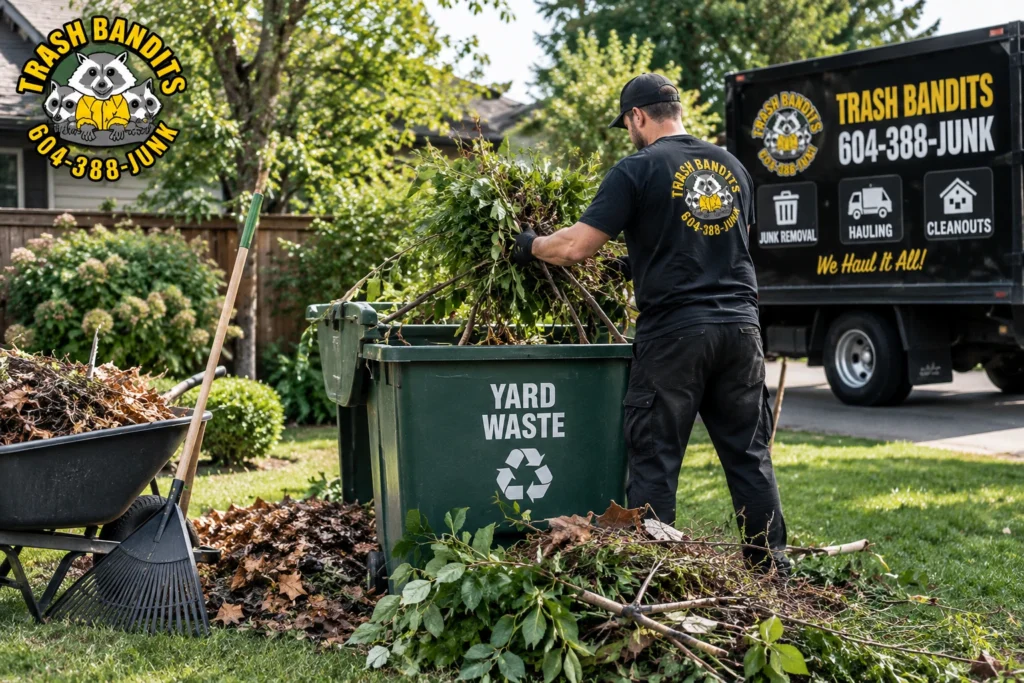
Leaves, branches, grass clippings etc. are organic materials created as a result of lawn maintenance. The right method of disposal can decrease excess waste and make seasonal cleanups easier.
What Counts as Yard Waste?
Leaves, grass clippings, weeds, small branches and garden trimmings are examples of yard waste. The materials accepted will be based on local collection rules.
Can You Compost Yard Waste?
Yes. Suitable plant material can be composted when properly managed. If you are wondering can you compost grass clippings, the answer is yes. Mosquitoes will be less attracted to the water if there is a moderate amount of grass and dry leaves mixed in to prevent matting and bad odor. This explains why are grass clippings good for compost is a common lawn-care question: they supply nitrogen, but need the right balance of other materials.
For homeowners researching what can you put in a yard waste compost pile, suitable leaves, untreated plant trimmings, and moderate amounts of grass clippings are good starting points. Avoid contaminated materials and follow local composting guidance.
How Long Does It Take to Compost Yard Waste?
The composting time for yard waste varies with temperature, moisture, aeration, yard waste size and composting methods. Several months or longer may be required for materials to be a mature compost.
What Shouldn’t Go in a Compost Pile?
When considering what not to put in a pile, remember that no pet waste, diseased plants not suitable for safe treatment, contaminated materials, treated wood or plastics should be added. Do not dispose of food scraps or other limited resources according to local guidelines.
How Do You Dispose of Yard Waste?
Home composting, green bin programs, as well as drop-off or professional collection sites are available. Review accepted materials and collection times for services before selecting one. Residents might have access to yard waste disposal Vancouver provided by the municipality or by an approved yard waste disposal site. Before the annual yard waste collection, look into whether there is any service available for yard waste pickup Vancouver, and if you need to have more than what your regular waste collection provides, you can compare the available services.
Frequently Asked Questions:
Is Compost Good for Your Lawn?
Yes. Composted product can be used as a soil amendment to enhance soil structure, retain moisture and add organic matter. The outcome will be affected by soil conditions and proper application.
How Often Should You Put Compost on Your Lawn?
A light application once or twice a year can be beneficial to many lawns. The time should be determined by soil quality, grass growth and previous applications.
Can You Put Compost Directly on Grass?
Yes. Apply small amounts of good compost and rake through grass between the sward. Don’t completely cover the turf.
Should You Apply Compost Before or After Mowing?
Mow first. Grass is shorter making even composting easier and ability to reach soil easier.
Does Compost Make Grass Greener?
It can also help the grass grow, which makes the grass greener and healthier and provide some nutrients. However, yellowing may also be caused by pests, disease, poor drainage or nutrient deficiencies.
Can Compost Replace Lawn Fertilizer?
Not always. Fertilizer provides more targeted nutrition; compost will provide varying nutrient levels. Depending on the soil-test results, some lawns require both.
Final Thoughts:
Compost is a useful tool in lawn management as it enhances soil properties, promotes rooting and aids in water management. Always use mature compost, apply a light layer and select the right season for your grass type. Another way to minimize garden wastes is to compost the appropriate leaves and grass clippings rather than sending them to the garbage.
WIf you need help managing bulky branches, leaves, or other cleanup debris, compare local yard waste removal Vancouver options and check which materials each service accepts. Depending on your location and the amount of debris, junk removal Vancouver, yard waste removal Burnaby, and yard waste removal Richmond services may also be relevant. Compare collection availability, accepted materials, and pricing before booking. For larger projects, ask about the best yard waste removal service, same-day yard waste pickup, or eco-friendly yard waste removal options that suit your cleanup needs.