Summary:
Get information on how to dispose of car batteries, where to recycle them, and the costs for disposal and battery return programs. This guide provides information on handling, transportation, recycling and core charges of old car batteries. It also includes options like Vancouver disposal and British Columbia disposal options, along with tips on when to hire a specialist over regular junk removal, to ensure environmental protection and avoid risking unsafe disposal.
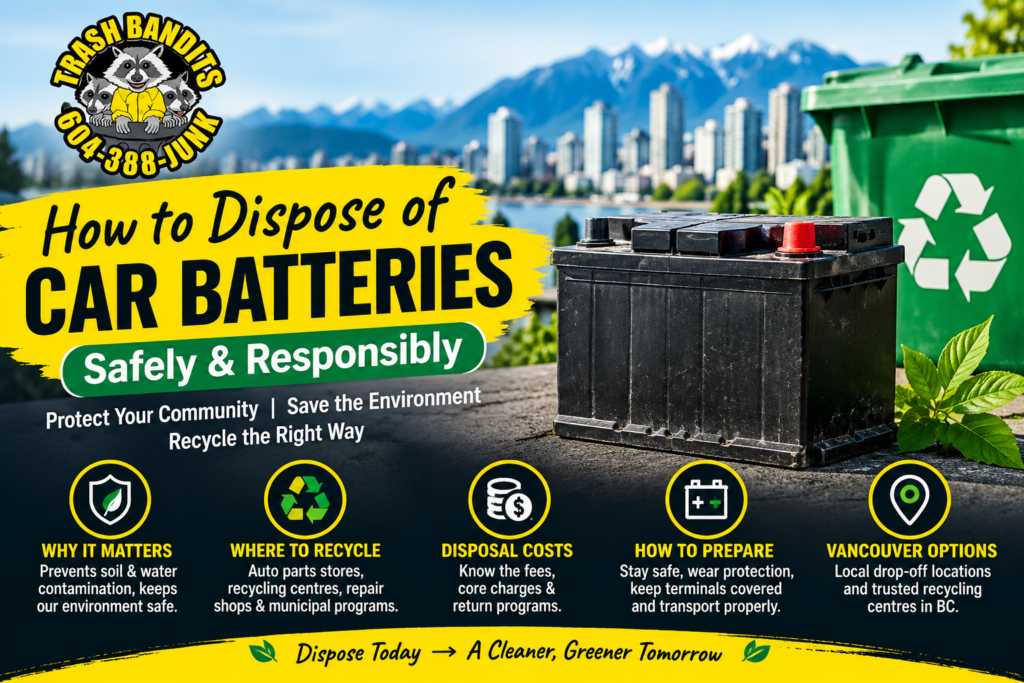
How to Dispose of Car Batteries Safely and Responsibly
If your vehicle won’t start, you need to replace a bad car battery, or if you are cleaning out your garage, an old car battery can be a problem. However, household garbage cans will present a risk to people and the surrounding environment due to the presence of toxic chemicals. If you know how to dispose of car batteries, you can choose a safe car battery recycling centre, avoid paying for a recycling service you don’t need, and recover valuable materials. Before putting other items in the bin, review our guide to what can’t be thrown away in Vancouver to check local disposal restrictions. This guide helps you to know where and how to prepare used batteries for transport and provides information on recycling fees and local requirements. The best option for Vancouverites is to use an appropriate battery recycling program rather than assume regular waste collection will take it.
Why Is Proper Car Battery Disposal Important?
When it comes to recycling and disposing of cars, the right approach can ensure the safe reuse and recycling of valuable car components and the prevention of soil and water contamination.
Environmental Risks of Improper Battery Disposal:
Most normal car batteries have corrosive electrolyte and lead. These materials can contaminate surrounding surfaces and pose health and environmental risks, should a battery break or leak. Safe auto battery disposal prevents the release of hazardous materials into the regular waste stream and enables the recovery of useful elements.
How Car Batteries Can Harm Soil and Water:
In the event of a battery malfunction, it may release lead-containing material and acidic electrolyte. Soil, water and groundwater can be contaminated. It is important to recycle these materials at an approved centre to avoid them polluting the environment.
Why Lead-Acid Batteries Need Special Handling:
Lead-acid batteries are heavy and if the electrolyte leaks out of them can cause chemical burns. They may also form a short circuit to conductive objects at their terminals. British Columbia has unique regulations for the collection and management of used lead-acid batteries that include leak-proof containment of leaking batteries.
Where Can You Dispose of Old Car Batteries?
Old car batteries can be taken to any auto parts store, battery recycling centre, automobile repair shop or municipal hazardous waste collection centre that accepts them.
Take Old Car Batteries to an Auto Parts Store:
Some auto parts stores will take used lead-acid batteries – especially when customers buy replacement batteries. Some stores may have different rules, so call ahead to see if the store takes batteries without a purchase.
Find a Licensed Battery Recycling Centre:
There is also a recycling depot, which you can dedicate to. British Columbia’s Recycling Council of British Columbia designates those places in BC that accept used auto batteries, including participation by members of the Canadian Battery Association. Take advantage of its battery recycling advice and see what the options are.
Ask an Automotive Repair Shop About Battery Recycling:
A mechanic could take your used battery when replacing it. If battery is already removed, ask about handling, if applicable, and if the shop will take customer batteries.
Check Municipal Household Hazardous Waste Programs:
Batteries are collected at specific locations by some municipal recycling or waste centers. Residents in Metro Vancouver can use the recycling directory or contact 604-RECYCLE to find an appropriate drop-off location.
How to Prepare a Car Battery for Disposal:
Know how to safely check, handle, and secure an old car battery for transport to a proper recycling center, without risk of leaks, chemical exposure or electrical hazards.
Turn Off the Vehicle Before Removing the Battery:
Turn off the ignition and other electrical accessories before draining the battery. If you don’t know what to do, have a qualified mechanic take it out. Wrong disconnection may lead to sparks, electrical damage or injury.
Wear Appropriate Protective Equipment:
A conventional battery is handled safely with the use of safety glasses and acid-resistant gloves. Do not look into the terminals and do not touch any liquid that has leaked.
Keep Battery Terminals Protected During Transport:
Inspect for cracks, swelling, corrosion, or leakage of fluid from the battery, but do not open it. If damaged, don’t try to fix it or put it in bags in the car. Call the battery recycling facility for instructions on how to handle.
How to Transport an Old Car Battery Safely:
Keep terminals from coming in contact with metal. Never place conductive items near the battery, or loose parts, screws, etc., to minimize the possibility of a short circuit.
Keep the Battery Upright and Secure:
Mount a standard lead storage battery in a sturdy, acid-proof battery tray or an appropriate container with the battery upright. Make sure that it is secured against falling or slipping while being moved.
Prevent Metal Objects From Touching the Terminals:
Keep the battery separate from tools, keys, and other metal items. Do not stack batteries in a way that allows their terminals to touch.
Handle Leaking or Damaged Batteries With Extra Care:
A leaking battery should NOT be shipped in a standard open container. Inquire with the receiving facility how it must be contained, and if a specialized collection service is needed. Do not come into contact with any spilt material.
Can You Recycle a Car Battery?
Yes. The majority of traditional automotive lead-acid batteries are recyclable by implementing suitable collection programs. Recyclers recycle lead and plastic to be reused, minimising the need for new raw materials. When looking into car battery recycling, the first thing you need to do is determine the type of car battery in question, then check to see where it can be recycled in your area. Although the battery may be dead, recycling is still the best choice for conventional automotive batteries.
How Much Does Car Battery Disposal Cost?
The cost depends on the battery type, recycling location, and whether you need collection or transportation assistance. Many participating programs accept conventional lead-acid batteries at no charge, but policies can vary. Confirm the fee before visiting.
What Is a Core Charge on a Battery?
A core charge on battery purchases is a deposit-like fee that may be applied when buying a replacement battery. Returning the old battery may qualify you for a credit, depending on the retailer’s policy.
If you are asking how much is a battery core charge, there is no universal consumer price. Ask the seller about the amount, refund conditions, and deadline. Keep your receipt if a return credit is offered.
Car Battery Disposal Rules and Regulations:
Check local and provincial regulations to understand how to handle, transport, and recycle old car batteries safely while meeting hazardous waste disposal requirements.
Check Local Battery Recycling Requirements
Rules vary by location and battery type. In British Columbia, waste lead-acid batteries are subject to specific handling and storage requirements. Check the current provincial guidance and the receiving facility’s instructions before arranging disposal.
Battery Collection and Transportation Rules
Do not assume that a general waste collection service can transport every battery type. Damaged batteries may need special containment, while electric vehicle batteries require different precautions from ordinary 12-volt car batteries.
Find Approved Recycling Facilities in Your Area
For local options, search car battery recycling near me and confirm that the result accepts automotive lead-acid batteries. Vancouver residents can look into car battery disposal Vancouver options through regional recycling resources. If you need help with other household items, check the rules for hazardous waste Vancouver facilities separately.
Frequently Asked Questions:
Where Can I Dispose of an Old Car Battery?
Return it to a participating battery recycling depot, an accepting auto parts store, or an automotive repair shop. Confirm the location’s acceptance policy before travelling.
Can I Throw a Car Battery in the Garbage?
No. Do not place a car battery in household garbage or leave it beside a bin. If you wonder can you throw away a car battery, the safe answer is to use an appropriate recycling or hazardous-waste collection route. You can also check our guide to what can’t be thrown away in Vancouver for more examples of items that need special handling. Metro Vancouver bans hazardous materials from its waste facilities and directs residents to suitable collection options.
Can You Get Money for an Old Car Battery?
Sometimes. A retailer may provide a core credit, and certain scrap or battery recyclers may pay for eligible batteries. Payment depends on the facility, battery condition, and applicable program.
Are Car Batteries Recyclable?
Yes. Conventional lead-acid car batteries are widely recyclable through established collection programs. Always use a facility that accepts your specific battery type.
Can Auto Parts Stores Accept Old Car Batteries?
Some do, but acceptance rules vary. Ask whether the store accepts batteries without a new purchase and whether damaged batteries are permitted.
Can Junk Removal Take a Car Battery?
Not every provider accepts automotive batteries. Before booking, review items junk removal companies won’t take and confirm the provider’s policy directly. A specialist battery recycling facility is often the better option.
Final Thoughts
Perception how to dispose of a car battery helps you protect your household, reduce environmental harm, and recover reusable materials. For a conventional battery, start with a participating recycling depot or retailer and confirm its handling requirements. Never place a battery in regular garbage, and seek specialist advice for leaking or damaged units.
If you are clearing out a garage, separate automotive batteries from general clutter before arranging a collection. Review our garage cleanout service in Vancouver and household junk removal in Vancouver pages to understand the types of general cleanup services available. For other eligible household items, you can also review our junk removal pricing information before booking.