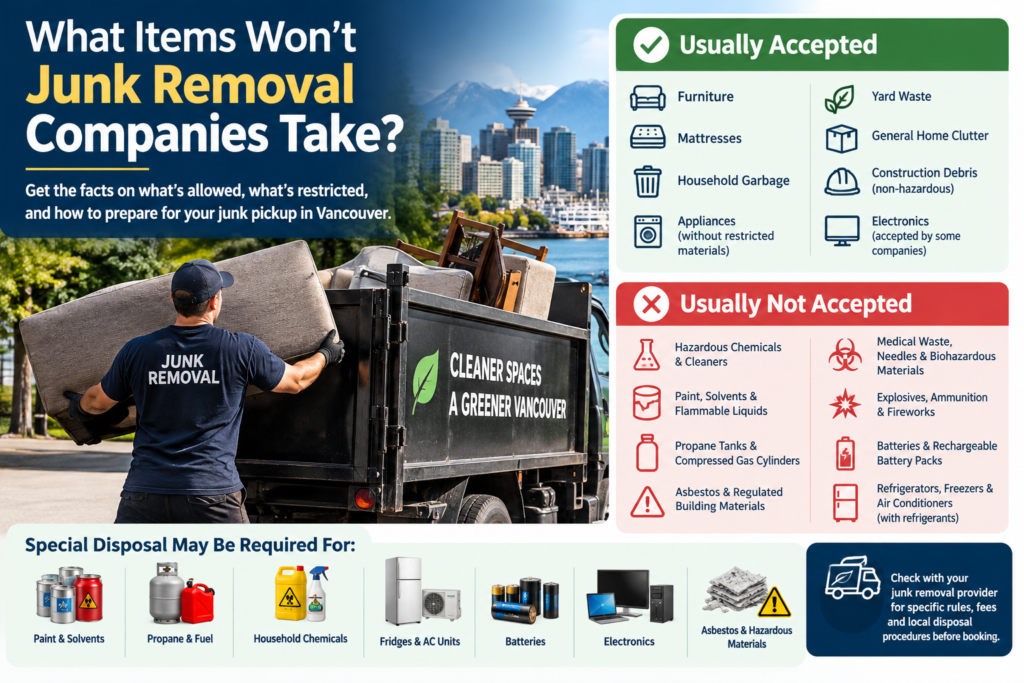
Most junk removal services will pick up furniture, mattresses, household garbage and just about anything else, but many limit hazardous chemicals, fuel, propane tanks, explosives, medical waste and even asbestos. This guide provides information on what will be collected (or not collected) and what is available for disposal in Vancouver, as well as preparation for pickup. Please check any materials accepted, fees charged and local disposal procedures with the provider you are using before booking.
Items That Require Special Disposal Before Junk Removal
A garbage collection company simply will not pick up the items that are found in a home, garage or renovation project during the cleanup. Some materials such as paint, gasoline, propane tanks, batteries and asbestos-containing materials might need special handling or disposal. If you are concerned about what items won’t junk removal companies take, this will give you an idea of what the limitations are, why they are there, and where to go for unwanted items. You’ll also know how to get ready for collection and prevent surprise collection fees from being surprised.
What Items Do Junk Removal Companies Usually Refuse?
The junk removal restricted items list is designed to make it easier for you to distinguish between items which can be disposed of normally and those that are restricted. Items accepted are subject to change based on company, vehicle, insurance, and local regulations.
Hazardous Chemicals and Household Cleaners:
Products that are pesticides, strong chemical cleaners, pool chemicals or any product that can be corrosive to workers and/or leak during transport can be refused. If possible, store in original containers; dispose of hazardous waste locally.
Paint, Solvents, and Flammable Liquids
Fire and spill or environmental hazards may occur from wet paint, paint thinner, gasoline and solvents. Why do junk removal companies refuse to take wet paint? Liquid paint can leak and will need special collection. Determine if the paint product can be recycled locally and if it requires prep for recycling.
Propane Tanks and Compressed Gas Cylinders
Will junk haulers pick up propane tanks and gasoline? General junk removal companies will not accept propane cylinders, fuel and compressed gas containers as they may lead to fire or explosion. Please speak to an authorised cylinder retailer or collection centre for directions. Do not puncture, burn or put a pressurised cylinder in a garbage disposal.
Asbestos and Other Regulated Building Materials:
Insulation, tiles and other regulated materials that contain asbestos might need to be handled by a licensed professional and disposed of in an approved facility. Never cut, sand or disturb any asbestos that may have been found. Do not do the work yourself, call a qualified asbestos professional to arrange the removal.
Medical Waste, Needles, and Biohazardous Materials:
Biological waste, dressings that are soiled and used needles generally need special collection. Check with a pharmacy, health care professional, or local waste disposal service for approved options for disposing of sharps and medical waste.
Explosives, Ammunition, and Fireworks:
Ordinary junk trucks are not appropriate for fireworks, ammunition, and explosives. Never put them in household trash or try to take them apart. Refer to local authorities for safe handling instructions.
Can Junk Removal Companies Take Electronics and Appliances?
Some companies accept electronics and appliances, some only accept certain items, or they may charge extra for them.
TVs, Computers, and Other Electronic Waste:
There could be materials that require specific recycling for televisions, laptops, monitors and printers. Inquire if the business will take in e-waste items or if they have an e-waste recycling program.
Refrigerators, Freezers, and Air Conditioners:
These devices can have refrigerants or regulated parts. Only some providers will accept them for specific handling requirements (lt pnx wssb). Do not cut refrigerant lines or remove refrigerant without professional assistance.
Batteries and Rechargeable Battery Packs:
Lithium-Ion Batteries may burn if damaged in any way or improperly handled. Avoid putting batteries in garbage or mixed recycling, or near heat. Perform local drop-off as per instructions.
Appliances Containing Refrigerants or Other Restricted Materials:
Acknowledge agreement before removal. Some apparatus must be collected using special services due to refrigerants, oils or electrical parts.
Can Junk Removal Companies Take Electronics and Appliances?
There are some companies that accept electronics and appliances, others limit certain electronics or appliances or require extra costs.
TVs, Computers, and Other Electronic Waste:
Televisions, laptops, monitors and printers may have materials which require special recycling. Inquire if the company will accept electronic waste, or use an electronics recycling program.
Refrigerators, Freezers, and Air Conditioners:
The appliances can have refrigerants or other regulated parts. Some providers will only accept them for specific handling requirements (lt pnx). Do not cut any refrigerant lines or release refrigerant.
Batteries and Rechargeable Battery Packs:
Lithium-ion batteries can catch fire if they are damaged or not handled correctly. Prevent batteries from being exposed to heat and don’t put them in the normal garbage or mixed recycling. Please follow local directions for battery drop-offs.
Refrigerants or other restricted materials are associated with the use of some appliances.
Verify acceptance before removal appointment. Some equipment needs special collection due to refrigerants, oils or electrical parts.
Appliances Containing Refrigerants or Other Restricted Materials
Construction waste is often collected by most of the junk removal companies, including drywall, lumber, bricks and roofing materials, but there may be limitations regarding weight, size, and materials. Most hazardous waste, asbestos and contaminated debris must be disposed of in a specific manner and will likely need special expertise.
Can Junk Removal Companies Remove Construction and Renovation Waste?
Many junk removal companies accept construction debris such as drywall, lumber, bricks, and roofing materials, but restrictions may apply based on weight, volume, and material type. Hazardous waste, asbestos, and contaminated debris usually require specialized handling and approved disposal services.
Drywall, Lumber, and General Renovation Debris
Many companies accept ordinary drywall, untreated lumber, and renovation debris within their weight and volume limits. However, they may exclude contaminated materials and certain treated products.
Concrete, Bricks, and Heavy Construction Materials
Concrete, bricks, and masonry can exceed a truck’s weight limit. Ask about load restrictions and heavy-material fees before arranging pickup.
Roofing Materials and Insulation
Roofing shingles, insulation, and similar materials may be accepted when they are uncontaminated and properly packaged. Suspected asbestos or chemical contamination requires separate assessment.
Asbestos-Containing Materials and Contaminated Debris
Do not mix potentially hazardous construction waste with general debris. Contact a qualified professional to determine the correct removal and disposal procedure.
What Household Items May Junk Removal Companies Refuse?
Junk removal companies may refuse oversized furniture, heavily soiled mattresses, mould-contaminated belongings, perishable food, and items that require special handling. Acceptance depends on the company’s policies, safety requirements, and local disposal regulations, so confirm restrictions before booking a pickup.
Oversized or Extremely Heavy Items
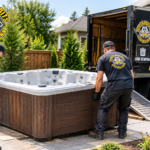
Large safes, industrial equipment, hot tubs, and oversized machinery may exceed a company’s lifting capacity or vehicle limits. Special equipment or a dedicated removal service may be necessary.
Items Contaminated With Mold, Chemicals, or Pests
Furniture with severe mold, pest infestations, or chemical contamination may be refused to prevent exposure and cross-contamination.
Food Waste and Perishable Materials
General junk removal crews may not collect rotting food, liquids, or other perishable waste. Use the appropriate municipal organics or garbage collection service.
Items Requiring Special Handling or Disposal
Some items need dismantling, specialist equipment, or a separate waste stream. Ask about these requirements before moving them outside.
Why Do Junk Removal Companies Refuse Certain Items?
Junk removal companies refuse certain items because they can pose health and safety risks, damage equipment, or require specialized handling. Local disposal regulations and landfill restrictions may also prevent hazardous materials, chemicals, and other prohibited waste from being transported with general junk.
Health and Safety Risks
Hazardous chemicals, sharp objects, pressurized cylinders, and contaminated waste can injure workers or damage equipment.
Environmental Regulations and Disposal Requirements
What items are legally prohibited from landfills? The answer depends on the material and applicable local rules. Hazardous chemicals, certain electronics, and other restricted products may need designated recycling or disposal facilities.
Transportation and Handling Restrictions
Some materials require special packaging, trained handlers, or approved transport. General junk removal vehicles may not be equipped for these loads.
Local Landfill and Recycling Facility Rules
Disposal facilities set acceptance conditions that determine what a hauling company can collect. Legal trash restrictions for Vancouver homeowners depend on the material and the receiving facility’s rules, so verify requirements before disposal.
What Should You Do With Items Junk Removal Companies Won’t Take?
If a junk removal company refuses certain items, take them to an approved recycling centre, hazardous waste facility, or specialized collection service. Check local disposal guidelines before dropping them off to ensure safe handling and avoid fines or environmental harm.
Where to Dispose of Paint and Household Chemicals
For how to dispose of household hazardous waste, identify the product first and consult the appropriate local collection program. Follow instructions for paint, solvents, cleaners, and pesticides rather than pouring them down drains or placing them in regular garbage.
How to Dispose of Batteries and Electronics
Use accepted battery collection points and approved electronics recycling programs. In British Columbia, check the relevant product stewardship program to find an appropriate drop-off location.
Where to Take Propane Tanks and Gas Cylinders
Contact a propane retailer or authorized cylinder collection facility. Confirm whether the container is accepted and follow its preparation and transport instructions.
How to Arrange Asbestos and Hazardous Waste Disposal
Contact a qualified asbestos professional or authorized hazardous waste provider. Do not package, transport, or disturb suspect materials until you have received appropriate instructions.
How to Find Local Waste Collection and Recycling Programs
For local hazardous waste disposal guidelines in Vancouver, start with the City of Vancouver’s official waste and recycling resources and check the relevant provincial product stewardship program. To find where to safely drop off prohibited junk items near Vancouver, verify accepted materials, hours, fees, and preparation requirements directly with the facility.
If you need certified eco-friendly junk disposal services in Vancouver, ask providers how they separate recyclable materials, handle restricted items, and document disposal where applicable.
How to Prepare Your Items Before a Junk Removal Pickup:
Before your junk removal pickup, separate restricted or hazardous materials from general household junk and make a list of the items you want removed. Share photos with the company, confirm accepted items and any extra fees, and follow its preparation instructions to ensure a smooth pickup.
Separate Restricted Items From General Junk
Keep hazardous products, batteries, electronics, and suspected asbestos separate from ordinary household items.
Identify Hazardous or Fragile Materials
Tell the provider about sharp objects, chemicals, heavy equipment, and fragile items before collection.
Share Photos and an Item List Before Booking
Send clear photos and a list of items so the company can assess access, load size, and potential restrictions.
Confirm Accepted Items, Fees, and Disposal Requirements
Ask for written confirmation of accepted materials, extra charges, and any preparation requirements. This helps avoid delays and unexpected costs.
Can Junk Removal Companies Take Everything in a House?
Items Commonly Accepted by Junk Removal Services
Many providers collect furniture, mattresses, clothing, household clutter, and ordinary non-hazardous debris.
Items That Require Special Collection Services
Hazardous chemicals, propane tanks, medical waste, asbestos, and certain electronic or refrigerant-containing products may need specialist disposal.
How to Confirm a Company’s Accepted Items List
Ask the company for its current prohibited-items policy and explain anything unusual before booking. If you’re researching what items won’t junk removal companies take, remember that acceptance varies between providers, even within the same city.
Frequently Asked Questions:
What Is the One Thing Junk Removal Companies Won’t Take?
No single item is refused by all companies, but often there is a need for special handling for explosives, hazardous chemicals, and asbestos.
Do Junk Removal Companies Take Paint Cans?
A few will take empty paint cans, a quarter will take dry paint cans, and sometimes liquid paint may need a special collection program. Always check local rules before.
Can Junk Removal Companies Take TVs and Computers?
Most will take electronics; some may need extra recyclables or extra fees.
Will Junk Removal Companies Take Propane Tanks?
The majority of general providers do not accept propane tanks. Please contact an authorized retailer/collection facility for safe disposal options.
Can Junk Removal Companies Remove Construction Debris?
Often, yes. Normal renovation waste can be accepted, depending on the weight, contamination limits, and regulations of different materials.
What Should I Do With Hazardous Household Waste?
Know the product and follow an approved collection/disposal program. Do not pour any hazardous chemicals into drains or combine incompatible chemicals.
Do Junk Removal Companies Charge Extra for Certain Items?
They might also have extra charges for heavy loads, difficult access, special handling or special disposal requirements. Some materials won’t go in any amount.
Final Thoughts:
Knowing what items junk removal companies won’t take helps you plan a safer, smoother cleanout. Separate restricted materials, agree in advance what and how much will be collected, and ensure items that general waste collectors will not take are collected at approved recycling or hazardous waste disposal facilities. Make sure you ask about materials that are accepted, any additional charges, and how they get disposed of before booking so that you can make responsible use of your unwanted goods.