
Summary:
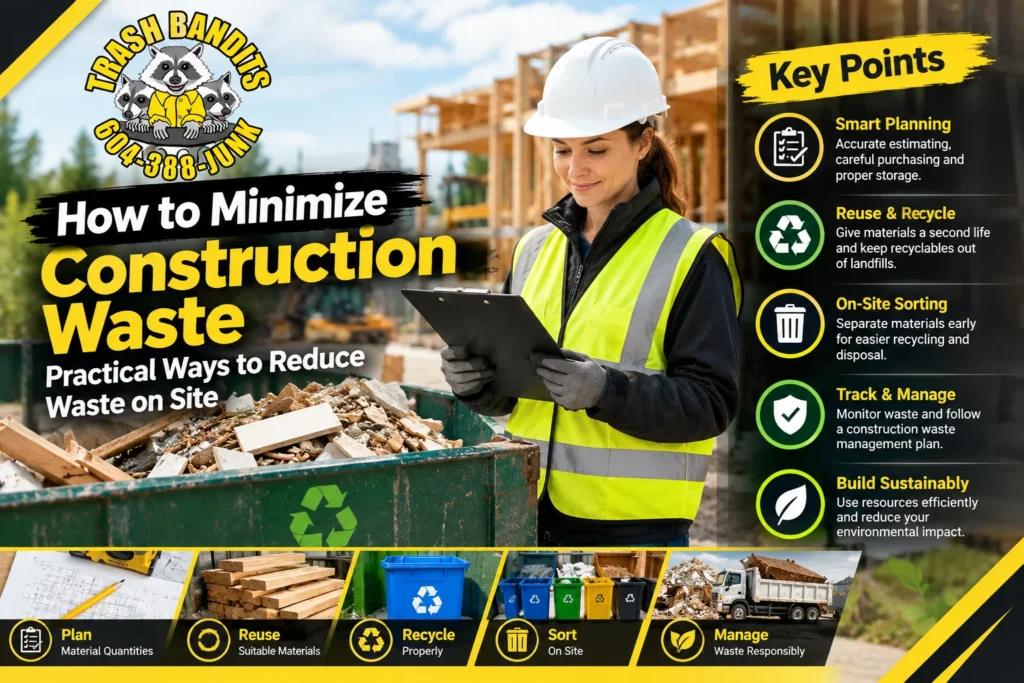
This guide explains how to minimize construction waste through accurate planning, material measurement, proper storage, reuse, recycling, and on-site sorting. It shows contractors and project teams practical ways to control material loss, reduce disposal costs, and improve job-site organization. The article also covers waste tracking, construction waste management plans, reusable materials, and sustainable strategies that help construction projects use resources more efficiently.
Construction Waste Reduction Starts With Smart Planning:
Construction projects can generate large amounts of leftover materials, damaged products, packaging, and demolition debris. Without proper planning, these materials can increase project costs and create unnecessary disposal problems. How to minimize construction waste starts before materials reach the job site. Accurate estimating, careful purchasing, proper storage, material reuse, and organized recycling can help contractors control waste throughout the project. These practices support minimizing construction waste while improving material efficiency and site organization.
What Is Construction Waste?
Construction waste includes materials discarded during building, renovation, repair, and demolition work. Common examples include concrete, wood, drywall, metals, bricks, glass, plastics, packaging, and salvaged building components. The U.S. EPA identifies many of these materials as construction and demolition materials that can potentially be reused, recycled, or recovered instead of being sent directly for disposal.
Construction waste can build up quickly during renovation, remodeling, and demolition projects. Once reusable materials have been separated, the remaining debris needs to be handled responsibly. Contractors can Remove – Construction Debris by sorting materials first and sending recyclable items to suitable facilities while arranging proper disposal for materials that cannot be recovered.
Common Types of Construction Waste:
Construction waste can include broken concrete, excess lumber, drywall offcuts, scrap metal, damaged bricks, packaging, insulation, glass, plastics, and unused materials. Some waste is unavoidable, but a significant portion can be prevented through better estimating and handling. Residential renovation projects can also produce unwanted items from garages, sheds, and storage areas. For homeowners searching for Garage Cleanout services near me, separating reusable items from construction debris can make the cleanup process more organized and reduce the amount of material sent for disposal.
Where Does Construction Waste Come From?
Waste can occur during design, ordering, delivery, cutting, installation, demolition, and cleanup. Incorrect measurements can create excess offcuts, while poor storage can cause materials to become damaged by moisture or impact. Poor coordination between trades can also lead to duplicate orders or materials being installed incorrectly.
Waste can also accumulate when leftover materials, old fixtures, tools, packaging, and unused supplies remain in storage after a project is completed. In these situations, Storage Junk Removal can help clear unwanted materials and keep usable items separate from debris that requires recycling or disposal.
Why Is It Important to Minimize Construction Waste?
Good construction waste management helps project teams control material use from planning through final cleanup. Source reduction is especially important because preventing waste before it is created can reduce material use, disposal needs, and associated costs.
Reduce Construction Costs:
Unused materials still cost money to purchase, transport, store, and eventually dispose of. Construction waste reduction can therefore lower unnecessary material and disposal expenses.
Improve Material Efficiency:
Using materials efficiently means getting more usable work from every sheet, board, pipe, or batch of material. Careful measurements and reuse of suitable offcuts can reduce unnecessary purchases.
Reduce Environmental Impact:
Reusing and recycling materials can reduce the demand for new resources and help keep recoverable materials out of landfills. EPA notes that reuse and recycling can conserve resources and reduce environmental impacts associated with producing new materials.
Improve Job Site Organization:
A cleaner site makes materials easier to locate and can reduce damage, unnecessary movement, and confusion between trades. Organized waste stations also make sorting easier.
How to Minimize Construction Waste:
The most effective construction waste reduction approach combines prevention, reuse, recycling, and responsible disposal. These ways to reduce construction waste should be included in daily site operations rather than treated as a final cleanup task.
Plan Material Quantities Carefully:
Prepare a detailed material list before purchasing. Include measurements, quantities, standard sizes, expected cutting requirements, and reasonable allowances. Avoid adding excessive quantities simply to create a large safety margin.
Order Materials Based on Accurate Measurements:
Verify dimensions before placing orders and before cutting materials. Accurate measurements can prevent unnecessary drywall, lumber, flooring, pipe, and other material offcuts. Local guidance also recommends checking measurements before cutting and creating detailed material lists.
Choose Prefabricated and Pre-Cut Materials:
Prefabricated components can reduce cutting and assembly work at the site. Standardized and modular components can also make material use more predictable. EPA identifies standard-size modular components and design for adaptability, disassembly, and reuse as useful waste-reduction practices.
Store Materials Properly:
Protect materials from rain, moisture, dirt, direct exposure, and unnecessary handling. Keep products elevated where appropriate and organize them so workers can access materials without moving or damaging other supplies.
Reuse Materials Whenever Possible:
Do not automatically treat leftover materials as waste. Suitable wood cutoffs can sometimes be used for blocking or smaller components. Reusable doors, fixtures, hardware, insulation, and other building components may also have another application. EPA recommends salvaging usable materials during deconstruction and renovation.
Separate Waste at the Construction Site:
Set up clearly labeled containers for materials such as wood, metal, cardboard, drywall, and concrete. Separating waste at the source reduces contamination and makes recycling or recovery easier. This is one of the practical construction waste management best practices for minimizing waste on construction project sites.
Recycle Construction Materials:
Identify local recycling facilities before work begins. Construction waste recycling may include concrete, metals, wood, cardboard, drywall, and other materials where suitable recycling markets exist. EPA notes that concrete, asphalt, wood, and metals can have productive next uses when properly recovered.
Donate or Repurpose Usable Materials:
Usable cabinets, doors, fixtures, flooring, lumber, windows, appliances, and other products may be donated, resold, or reused. Before demolition, identify materials that can be recovered rather than mixing everything into a demolition load. When materials cannot be reused, donated, or recycled, arranging professional removal can help keep the job site organized. Homeowners and contractors may compare Top-Rated Junk Removal Services based on their accepted materials, recycling practices, service area, and disposal methods. Choosing a suitable provider can help ensure unwanted debris is handled through the appropriate channel.
Work With Reliable Contractors and Suppliers:
Choose suppliers who provide accurate orders, suitable packaging, delivery coordination, and return options for unused materials. Discuss waste requirements with subcontractors before work begins so everyone follows the same site procedures.
Train Workers on Waste Reduction:
Workers should know where materials belong, which items can be reused, and how waste containers are labeled. Short toolbox talks can reinforce correct cutting, storage, sorting, and cleanup practices throughout the project.
How to Reduce Waste During Construction Planning:
Effective planning answers how can construction waste be reduced before construction begins. The goal is to identify likely waste sources and control them before materials are purchased or work starts.
Create a Construction Waste Management Plan:
A construction waste management plan should identify expected waste streams, reuse opportunities, recycling options, disposal procedures, responsible team members, and measurable targets. It should also explain where each waste type will be stored and how it will leave the site.
Use Accurate Project Estimates:
Detailed estimates reduce over-ordering and help contractors purchase the correct quantities. Review measurements before ordering and update quantities when project specifications change.
Coordinate Trades to Avoid Material Waste:
Poor trade coordination can cause rework, damaged installations, and unnecessary material purchases. Schedule deliveries and installations so materials arrive when needed and are not repeatedly moved around the site.
Use Building Information Modeling (BIM):
BIM can help project teams coordinate building elements and identify design conflicts before construction. Better coordination can reduce rework and the material waste associated with incorrect installations.
Which Construction Materials Can Be Reused or Recycled?
Understanding construction waste recycling methods helps teams decide what should be recovered instead of discarded.
Concrete and Masonry:
Clean concrete, bricks, and masonry can sometimes be crushed and reused as aggregate, fill, subbase, or similar applications, depending on local requirements and available facilities.
Wood and Lumber:
Usable lumber can be reused directly, while suitable scrap wood may be processed into other products. Wood cutoffs can also serve smaller construction purposes when their size and condition allow.
Metal:
Steel, copper, aluminum, and other metals can have established recycling markets. Keep metals separated from mixed debris to improve recovery.
Drywall:
Clean drywall may be accepted by specialized recycling programs in some areas. Keep it separated and free from contaminants when required by the receiving facility.
Bricks and Blocks:
Intact bricks and blocks may be reused in other construction or landscaping applications. Broken masonry may have recycling or aggregate uses depending on local facilities.
Glass and Plastics:
Glass and some plastics may be recyclable when accepted by local processors. Check local requirements because acceptance rules vary by material and facility.
How Does Proper Material Storage Reduce Construction Waste?
Proper storage is an important part of construction waste minimization strategies because materials can become waste before they are ever installed.
Protect Materials From Moisture:
Keep moisture-sensitive materials covered and elevated where appropriate. Drywall, insulation, lumber, flooring, and similar products can be damaged when exposed to unsuitable conditions.
Prevent Breakage and Damage:
Stack and secure materials according to their characteristics. Avoid placing heavy products where they can fall onto fragile items.
Organize Materials for Easy Access:
Use clearly identified storage zones and keep commonly used materials accessible. Better organization reduces unnecessary handling and helps workers use existing inventory before opening new supplies.
How Can Contractors Track Construction Waste?
Tracking helps contractors understand where waste occurs and whether construction waste minimization efforts are working.
Measure the Amount of Waste Generated:
Record the number of bins, loads, weight, or volume of waste removed from the project. Use the same measurement method throughout the project for useful comparisons.
Track Material Usage:
Compare purchased quantities with installed quantities and remaining inventory. This can reveal materials that are repeatedly over-ordered or frequently damaged.
Identify Common Sources of Waste:
Look for recurring problems such as incorrect cutting, damaged deliveries, over-ordering, poor storage, packaging, and rework.
Set Waste Reduction Targets:
Create realistic project targets for reducing waste or increasing the percentage of materials reused or recycled. Review progress during regular project meetings.
Benefits of Reducing Construction Waste:
A structured approach to reducing construction waste can provide financial, operational, and environmental benefits.
Lower Disposal Costs:
Less material going to landfill can mean fewer disposal loads and lower construction waste disposal expenses, depending on local fees and requirements.
Lower Material Costs:
Reusing suitable materials and ordering accurately can reduce unnecessary purchases. EPA also identifies avoided purchase and disposal costs as economic benefits of recovering construction and demolition materials.
More Efficient Construction Projects:
Better material planning can reduce clutter, unnecessary handling, rework, and interruptions. This can help trades work more efficiently.
Better Environmental Performance:
Sustainable construction waste management supports resource conservation by keeping suitable materials in productive use for longer. Reuse, recycling, and source reduction can reduce reliance on new materials and disposal.
Frequently Asked Questions:
What is construction waste management?
It is the organized process of preventing, reducing, sorting, reusing, recycling, and responsibly disposing of materials generated by construction, renovation, and demolition work.
How do you reduce construction waste?
Start with accurate measurements and material estimates. Then control purchasing, protect materials during storage, reuse suitable leftovers, separate waste, and send recoverable materials to appropriate recycling or reuse facilities.
What construction materials can be recycled?
Concrete, masonry, wood, metals, cardboard, drywall, glass, plastics, and other materials may be recyclable depending on local facilities and contamination requirements. Always confirm acceptance rules before sending materials for construction debris removal or recycling.
How can waste management reduce construction costs?
Waste management can reduce unnecessary purchases, disposal loads, transportation, and material losses. Reusing suitable materials can also reduce the need for new products.
How do you create a construction waste management plan?
Start by identifying the project’s expected waste materials. Then determine which materials can be prevented, reused, donated, recycled, or disposed of. Assign responsibilities, establish collection areas, select local facilities, and set measurable waste-reduction targets.
Final Thoughts:
Knowing how to minimize construction waste requires more than adding recycling bins after construction begins. The strongest approach starts with accurate design and estimating, continues through purchasing and material storage, and ends with organized reuse, recycling, and disposal. Contractors can apply these construction waste reduction strategies to control costs, improve site organization, and use valuable materials more efficiently. The EPA similarly recommends source reduction, salvage, reuse, recycling, and responsible purchasing as parts of sustainable construction and demolition material management.