Retrofitting an existing bathtub to a new location may be more complicated than it appears. A tub can be fixed to the floor or mounted behind wall panels or hard-to-reach drain pipes. Sometimes a cast iron model will also be too heavy for a single individual to handle safely. This bathtub removal guide explains how to remove a bathtub safely, prepare your bathroom, disconnect accessible fittings, and arrange disposal in Vancouver. It also explains when to stop and call a professional. It also includes information on when to stop and to contact a professional.
What Should You Know Before Removing a Bathtub?
First, find out what type of bathtub you have and determine how it is attached to other walls and plumbing. These factors help you decide on the tools you need, the type of removal and the level of assistance you require.
Identify Your Bathtub Type:
Bathtubs are made from a variety of materials and have different designs. Acrylic and fibreglass tubs are typically lighter in weight, and steel and cast iron tubs are typically heavier. Alcove tubs are situated between three walls, free-standing tubs have exposed sides, and drop-in tubs sit inside a framed platform. Knowing the material and installation style helps you plan how to take out a bathtub without damaging nearby surfaces.
Understand the Plumbing and Bathroom Access:
Identify faucet, water supply, drain and overflow connections. Look and see if you can get to the drain from an access panel or other side of the wall. If you live in a condo, measure the bathroom doorway, hallway, stairs and elevator. These measurements help determine how do you get a bathtub out of a small bathroom and whether the tub needs to be dismantled.
Decide Whether You Need Professional Help:
For the experienced DIYer, a simple removal might be possible. But cast iron tubs, concealed plumbing, possible asbestos and accessibility issues can make it a risky undertaking. Before beginning, if connections are unclear, make arrangements for assistance.
Tools and Materials Needed to Remove a Bathtub:
Your bathtub removal tools list should include:
- Adjustable wrench, screwdrivers and pliers.
- Drain removal tool or appropriate wrench for draining
- Utility Knife and Pry bar.
- Reciprocating saw for cutting tub if necessary
- Work gloves, safety glasses, hearing protection, and appropriate respiratory protection
- Floor coverings, drop cloths and debris containers
Use tools for the type of tub material. Use protective equipment throughout use, particularly when cutting or dealing with sharp edges.
How to Prepare Your Bathroom for Bathtub Removal:
Preparation prevents water damage and helps to keep the adjoining bathroom dry.
- Turn off the water supply: If there is a main water shutoff or bathroom supply shutoff, close them. Drain any water pressure from the faucets.
- Remove the faucet and handles: Use the proper tools to loosen fittings if they are accessible. Do NOT force corroded connections.
- Disconnect the drain and overflow: Take off the stopper and overflow cover. Use an appropriate drain tool to remove the drain fitting. This is the main part of how to disconnect a bathtub drain.
- Remove caulk and sealant: Use a utility knife to carefully cut around the tub with the sealant.
- Protect nearby surfaces: Cover up the floor and protect the toilet, vanity and the walls from scratches and debris.
When learning how to disconnect a bath, keep in mind that just the visible drain fitting is only a portion of the plumbing. Never cut or change water supply or waste pipes without knowledge of the system. When connections cannot be reached or are complicated, contact a licensed plumber.
How to Remove a Bathtub Step by Step:
Follow these steps to understand how to remove a bathtub without rushing the process.
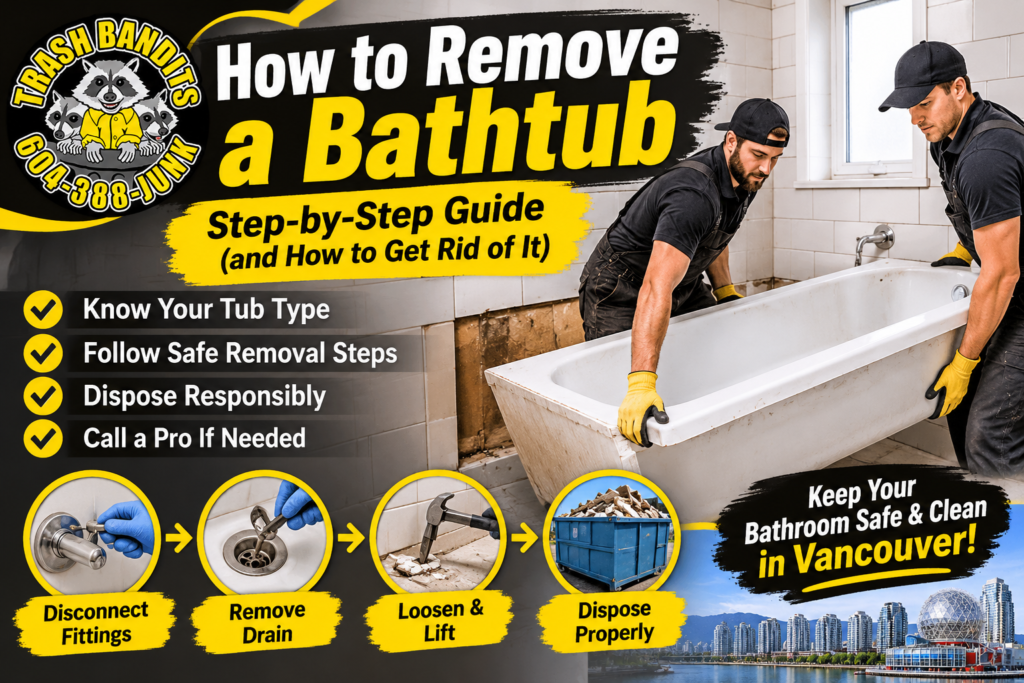
Step 1: Remove the faucet and handles. Remove readily available handles, spouts and trim. If using small parts, keep them together if reusing.
Step 2: Remove the drain stopper and overflow cover. Remove the cover and stop mechanism following its design.
Step 3: Disconnect the drain and overflow pipes. Open the plumbing and release connections slowly. When pipes are clogged, broken or inaccessible, stop and call a plumber.
Step 4: Remove the surrounding panels if needed. Alcove tubs may have wall panels or overlapping tile edge-to-edge with the tub flange. Only remove sections needed for access. If the renovation is on a larger scale, take a look at our drywall removal service and information on drywall removal.
Step 5: Loosen the tub from the wall and floor. Make sure to slice through any remaining caulk and look for screws, clips or brackets that may fix the tub.
Step 6: Cut the bathtub only if appropriate. The acrylic or fibreglass tubs can be cut into smaller sections if the appropriate equipment is available. Never try to crack a cast iron tub unsuspecting. Flying fragments, sharp edges and noise are a serious risk.
Step 7: Lift and remove the bathtub. Have adequate numbers of personnel and appropriate lifting equipment. Prior to relocating the tub, plan the walk, particularly through shared condominium areas or doorways that are too small to fit.
Step 8: Clean and inspect the area. Clear away any loose material and inspect the floor, the wall framing and plumbing for damage.
How to Remove Different Types of Bathtubs:
The way of removing the tub varies depending on the tub type and material.
- Alcove bathtub: Generally needs to have the drain plug removed, the caulk cut, the caulk exposed, and fasteners loosened.
- Freestanding bathtub: Unplug the drain and water connections from the tub and inspect the way the feet or base connect to the floor.
- Cast iron bathtub: They are very heavy and have a long life. It is typically best to have professional removal. When you are asking whether you can remove a cast iron tub yourself, you need to think about the weight, how you’re going to access it, lifting equipment and the danger of breaking it into sharp shards.
- Acrylic or fibreglass bathtub: These tubs are lighter and could be simpler to move. Some can be divided into smaller sections if needed.
- Drop-in bathtub: Remove trim or platform access from the drop-in bathtub before removal and lift.
Common Challenges When Removing a Bathtub
A tub may remain stuck because of old adhesive, hidden screws, wall tile, or hardened sealant. Rusted drain fittings can also resist normal tools. Heavy tubs and narrow hallways create additional lifting problems.
If you are working in an older Vancouver home, check for hazardous materials before disturbing old flooring, tile, drywall compound, or insulation. Asbestos cannot be identified by appearance alone. WorkSafeBC advises homeowners to arrange qualified testing before renovation work that may disturb suspect materials. If asbestos is suspected, stop work and use qualified professionals rather than cutting or breaking the material. Read WorkSafeBC’s asbestos guidance before proceeding.
What Should You Do After Removing an Old Bathtub?
Once the tub is out, inspect the subfloor for soft spots, stains, mould, or signs of long-term leakage. Check the drain and water supply connections for corrosion or damage. Repair the wall and floor before installing a new tub or converting the space into a shower.
This is also the right time to plan the waste. Broken tile, drywall, and other renovation materials may need separate handling. Our construction debris removal in Vancouver service and construction debris removal in Vancouver information can help you plan the cleanup.
How Much Does Bathtub Removal Cost?
The cost depends on the bathtub material, labour, plumbing access, floor level, and how much wall or flooring needs to be removed. A straightforward removal is generally less complicated than taking out a cast iron tub from an upstairs bathroom.
For a more accurate estimate, consider the amount of waste and the access available. Review our junk removal pricing information before arranging collection. DIY removal may reduce labour costs, but damaged pipes, flooring, or walls can increase the overall expense.
How to Dispose of an Old Bathtub
Your bathtub disposal guide should start with the tub material and local facility requirements. Metal tubs may have recycling options, while acrylic, fiberglass, and mixed renovation waste may require different disposal arrangements. Contact the receiving facility before transporting the tub, and do not assume every transfer station accepts bulky bathroom fixtures.
For bathtub disposal Vancouver, consider a suitable household waste or haul-away service. If the tub is part of a larger renovation, household junk removal may help with other unwanted items. Check what can’t be thrown away in Vancouver and Vancouver disposal restrictions before booking.
If you need construction debris removal Vancouver, plan for the tub, broken tile, drywall, and other materials separately. Homeowners outside Vancouver can also review options for junk removal Burnaby and junk removal Richmond, subject to service-area confirmation.
When Should You Hire a Professional Plumber?
Hire a licensed plumber if the drain or overflow connections are difficult to access, water lines need alteration, or you discover a leak. Professional help is also sensible for second-floor cast iron tubs, narrow staircases, and removals that require significant wall or floor work.
A bathtub removal service can help coordinate heavy lifting and waste handling, while a plumber handles plumbing work. This separation helps prevent damage and keeps the project organized.
Frequently Asked Questions
Can I Remove a Bathtub Myself?
Yes, if the tub is accessible, the plumbing is straightforward, and you have the right tools and lifting help. Heavy tubs and complicated connections are better left to professionals.
How Long Does It Take to Remove a Bathtub?
A straightforward removal may take several hours. Difficult plumbing, wall removal, heavy materials, or limited access can extend the job.
Can You Remove a Bathtub Without Removing the Walls?
Sometimes. It depends on whether the tub flange is accessible and how the tub was installed. Some alcove tubs require part of the wall surround to be removed.
How Hard Is It to Remove a Bathtub?
It can be a manageable project for an experienced DIYer, but weight, plumbing access, and the surrounding construction make a major difference.
Do I Need a Plumber to Remove a Bathtub?
Not always. However, hire a licensed plumber if you need to alter pipes, deal with hidden connections, or repair a leak.
How Do You Dispose of an Old Bathtub?
Check whether your local facility accepts the tub’s material and size. You can also arrange bathtub disposal through a suitable junk removal provider.
Final Thoughts
Knowing how to remove a bathtub starts with understanding the tub type, plumbing, access route, and disposal requirements. Prepare the bathroom, disconnect accessible fittings carefully, and avoid unsafe lifting or demolition. For bathtub removal Vancouver projects, plan for condo access and waste collection before work begins. If you need construction debris removal Vancouver, or are arranging junk removal Burnaby or junk removal Richmond, review the available service options and book a free estimate or request a free estimate before your renovation cleanup.