
Summary:
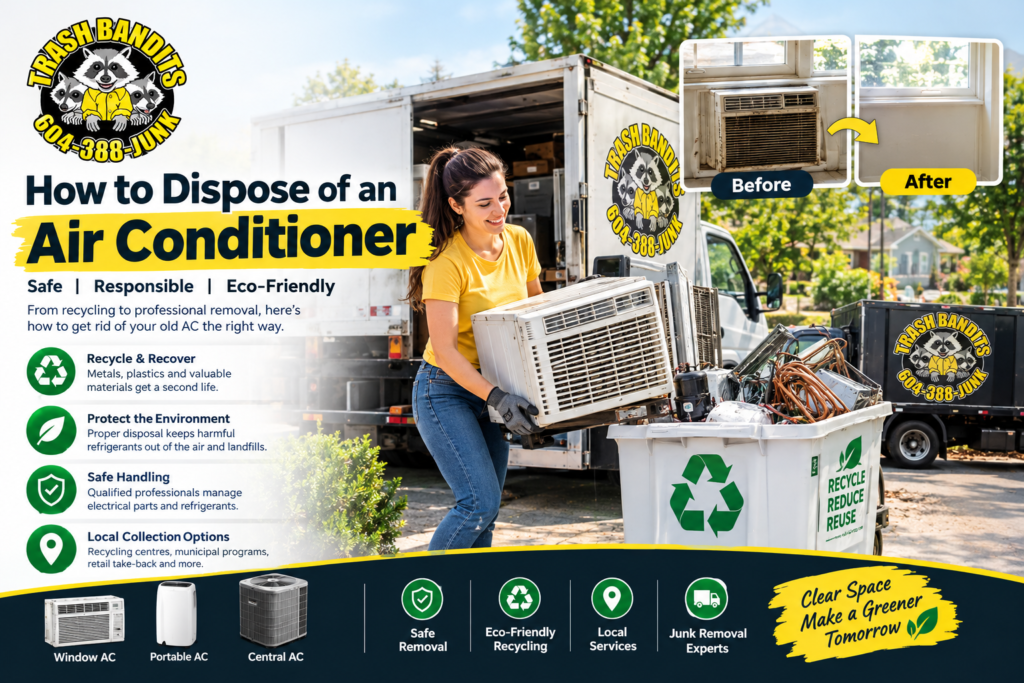
This guide explains how to safely dispose of an air conditioner, recycle old units, and find collection services. It covers handling procedures, disposal costs, municipal regulations, and preparation steps for window, portable, and central AC systems. Vancouver real estate buyers will also discover recycling facilities and when a professional removal is appropriate, allowing them to make a sensible and environmentally friendly decision.
What to Do With an Old Air Conditioner Before Replacing It:
When it’s time to replace an old air conditioner, you might be unsure what to do with it, whether it belongs in the garbage or what the air conditioner removal costs will be. The AC unit has metal, electrical parts and even dangerous refrigerants that require handling. The great news is that there are a number of ways to dispose of it safely. This guide explains AC disposal methods, recycling options, expected costs, and local resources for Vancouver homeowners.
Why Is Proper Air Conditioner Disposal Important?
A clunky old Air Conditioner doesn’t always belong in household garbage. Sustainable disposal ensures materials are recovered, and environmental impact is minimised.
Environmental Risks of Improper AC Disposal:
Electronic parts, wiring, plastics, and metals are found in air conditioners. Such dumping creates a waste of resources, which could be recovered if the materials were reused. If parts of the equipment are damaged, there may be environmental issues related to the release of refrigerants or other substances.
Selection of air conditioner disposal via a suitable recycling programme helps to recover materials and minimise waste.
Why Refrigerants Must Be Handled Properly:
Is air conditioner refrigerant hazardous? Uncontrolled handling can be harmful to the environment or pose safety issues with refrigerants. There are some that contribute to climate change and some older refrigerants can also be detrimental to the ozone layer. Avoid cutting refrigerant lines, self-extraction of refrigerant or release by unqualified persons. Refrigerant should be collected by a qualified technician when necessary prior to dismantling and recycling the equipment.
Benefits of Recycling Old Air Conditioning Units:
Professional AC recycling enables the recovery of metals and other usable materials, and helps ensure that the handling of components containing refrigerants is appropriate. If waste is not needed, it makes sense to recycle the product instead of putting it in a landfill.
How to Dispose of an Air Conditioner Safely:
The appropriate approach will vary based on the unit’s condition, installation type and local collection needs.
Check Whether Your Air Conditioner Can Be Reused:
Try to repair the unit, sell or donate it if it is still safe. Before lending it to another person, examine its condition, age and energy efficiency. An inefficient unit, although it still works, may not be the best solution for another household.
Find a Local Appliance Recycling Facility:
Look for a unit that will fit the kind of AC you have. To recycle AC unit equipment, find out if the facility will recycle window units, portable units or central units and if refrigerant recovery is offered.
The Major Appliance Recycling Roundtable has a locator tool to help British Columbia residents identify collection locations.
Arrange Municipal Bulk Waste or E-Waste Collection:
Some local governments offer periodic bulky-waste pick-up or direct residents to specified recycling centres. Look to see if there is a booking fee, special preparation fee, or collection fee. If your waste removal Vancouver project involves other types of electronics, you may wish to check out the E-waste Removal Vancouver options as well.
Contact an HVAC Professional for Safe Removal:
A permanent system has to be maintained more than a portable system. The HVAC expert can unplug the unit, arrange for the removal of refrigerant, and organise the removal. Ask if transport and recycling are part of the estimate.
Check Local Disposal and Recycling Requirements:
Please check local regulations for the disposal of your particular appliance prior to arranging for an AC disposal. The City’s Landfill and Zero Waste Centre information in Vancouver includes large appliances, such as air conditioners. Make sure to check the current acceptance rules, restrictions and charges before making a trip.
Where Can You Dispose of an Old Air Conditioner?
Depending on the equipment and your location, there are a number of possibilities.
Appliance Recycling Centres:
For recycle air conditioner equipment, the most appropriate choice is usually a special facility. Check on handling of refrigerants, accepted models, operating hours, and drop charges.
Municipal Waste and Recycling Programs:
Look in your municipality’s waste directory or recycling locator for approved drop-off locations. Some schemes will take appliances for recycling or collect them via a scheme that you have contracted with.
Retailer Take-Back and Appliance Removal Services:
If replacing the unit, check with the dealer to see if they can remove the old unit. The previous appliance may be picked up by some delivery companies for a surcharge or as a part of a particular offer.
Scrap Metal Recycling Facilities:
Air conditioners are accepted at some scrap yards as there are metals of value that can be recovered. Check before going to a facility to see if it will take an entire load of refrigerant and has the correct procedures for handling it.
Charities and Donation Programs for Working Units:
If the AC is safe to use, consider contacting a local charity or reuse organisation. Check to see if they accept AC units, as donation rules and needs are different.
How Much Does Air Conditioner Disposal Cost?
The overall cost is determined by the unit, where it will be located, where it will be taken, and the disposal method you select.
Average AC Removal and Disposal Costs:
Each household has a different price. The cost of moving a small window unit or a large central system is different. The move of a large central system does require more labor and may be costlier than a small window unit. Ask for a quote where removal, delivery, refrigerant recovery and recycling costs are all different.
Air Conditioner Recycling Fees:
Certain recycling initiatives permit residents to drop off certain appliances for recycling for free, others may charge drop-off or processing fees. Before visiting, check the rules.
Municipal Pickup vs. Professional Removal Costs:
If a suitable collection is provided in your area, it may be more cost effective to pay for a municipal collection service. When the unit is too large, hard to reach or permanently attached, professional removal may be beneficial.
Factors That Affect Air Conditioner Disposal Costs:
Equipment size, stairs, distance, refrigerant recovery, labour, and if there is other junk being picked up at the same time are the highest costs. Before getting a quote, compare Junk Removal Pricing and determine if the price includes all fees.
Can You Throw an Air Conditioner in the Garbage?
Is it possible to get rid of an air conditioner? Don’t assume that your home trash is suitable. Because of refrigerants, electrical parts, and materials that can be recycled, there are potential local disposal restrictions on air conditioners.
What Happens When an AC Unit Goes to a Landfill?
Improper disposal can waste recyclable metals and increase the risk of harmful substances being released. In Metro Vancouver, disposal bans apply to specified recyclable and product-stewardship materials, so check the applicable rules before disposing of an appliance.
How to Check Your Local Waste Disposal Rules
Search your municipal waste directory or contact the facility directly. Ask whether the unit must have refrigerant recovered before drop-off and whether the facility accepts your particular model.
How to Prepare an Air Conditioner for Disposal
Preparing the unit correctly can make collection easier and reduce safety risks.
Disconnect the Unit Safely
Turn off and unplug a portable or window unit if it can be done safely. Do not open sealed components or attempt refrigerant removal yourself.
Arrange Professional Removal for Permanently Installed Systems
For central air conditioner removal, arrange a qualified HVAC professional to disconnect the system and manage refrigerant recovery where required. Do not cut refrigerant lines or electrical connections yourself.
Protect the Unit During Transportation
Keep the appliance secure, protect it from damage, and ask the recycling facility how it should be transported. Avoid lifting heavy units alone.
Confirm the Recycling Facility Accepts Your AC Type
Before loading the appliance, verify acceptance requirements for window units, portable systems, and central AC equipment. If you are researching portable air conditioner disposal, ask whether the facility accepts the complete unit and its associated components.
Frequently Asked Questions :
How Do I Dispose of an Old Air Conditioner?
Choose an approved recycling centre, municipal collection service, retailer take-back programme, or qualified removal provider. The best option depends on your AC type and condition.
Can I Put an Air Conditioner in a Dumpster?
Do not put an AC unit in a dumpster without confirming that the waste provider accepts it. Refrigerant recovery and local disposal requirements may apply.
Where Can I Recycle an Air Conditioner Near Me?
Search for ac removal near me or use a recognised appliance recycling locator. Vancouver residents can check local facilities before arranging transport.
Does Air Conditioner Disposal Cost Money?
It can. Some recycling programmes accept eligible appliances free of charge, while removal companies and other facilities may charge for labour, transport, or processing.
Can I Take an Air Conditioner to a Scrap Yard?
Some scrap yards accept AC units, but confirm that they handle refrigerant-containing appliances correctly and accept your equipment type.
Do I Need a Professional to Remove an Air Conditioner?
Portable and unplugged window units may be removable without specialist disconnection if they can be handled safely. Permanently installed central systems should be assessed and disconnected by a qualified professional.
Can I Recycle an Air Conditioner That No Longer Works?
Yes. A broken unit may still contain recoverable materials. Contact a recycling facility to confirm acceptance and any preparation requirements.
Conclusion
The best disposal method depends on whether your air conditioner works, how it is installed, and which local services accept it. Recycling is often a practical choice because it allows materials to be recovered and refrigerants to be handled correctly.
For Vancouver residents, compare local drop-off options with appliance removal Vancouver services if transporting the unit yourself is difficult. You can also explore junk removal Burnaby, junk removal Richmond, or air conditioner removal Vancouver services when arranging collection in those areas.
Choose a provider that explains its removal process, confirms the final price, and uses an appropriate recycling route. Responsible ac disposal helps you clear space while reducing avoidable environmental harm.